
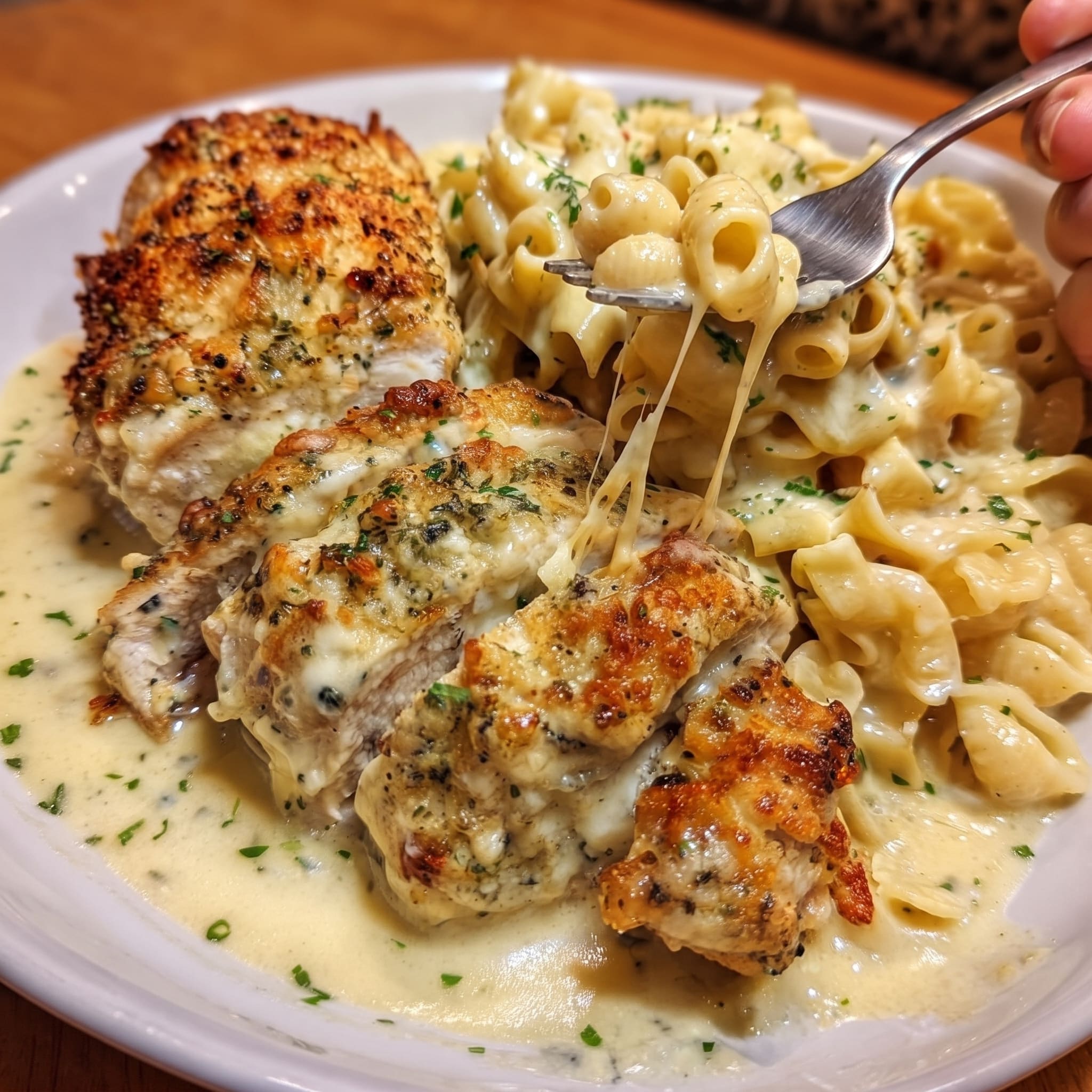
There are dinners that feel like they were made for busy evenings when you want something comforting without spending hours in the kitchen. Baked Caesar Chicken with Creamy Parmesan Pasta is exactly that kind of meal. Juicy chicken breasts are coated in creamy Caesar dressing, covered with Parmesan and herbs, then baked until beautifully golden while a silky Parmesan cream sauce comes together for the pasta.
What makes this recipe especially appealing is how effortlessly the two parts complement each other. The Caesar chicken has a savory, tangy, cheesy crust, while the pasta is rich, garlicky, and wonderfully creamy. Every bite combines tender chicken with pasta coated in a smooth Parmesan sauce.
I love recipes like this because they feel much more special than the effort they actually require. There is no complicated breading, no long list of unusual ingredients, and no elaborate preparation. The oven does most of the work for the chicken while you prepare the pasta and sauce.
It’s the perfect recipe for a family dinner, Sunday meal, or cozy night when you’re craving something warm and satisfying.
Table of Contents
Table of Contents
Choose Your Ingredients Carefully
Good ingredients make a noticeable difference in a simple recipe like this. Start with boneless, skinless chicken breasts of similar size so they cook evenly. If some breasts are particularly thick, gently pound them to an even thickness before baking. This helps prevent the thinner portions from drying out while the center finishes cooking.
A creamy Caesar dressing is ideal because it coats the chicken beautifully and provides plenty of flavor. Parmesan is used twice in this recipe: first to create the savory topping for the chicken and again to build the creamy pasta sauce.
For the pasta, penne is excellent because its ridges hold onto the sauce, while fettuccine creates a more luxurious, restaurant-style presentation. Freshly grated Parmesan generally melts more smoothly than pre-shredded varieties.
Fresh garlic is also worth using. It only takes a few seconds to sauté and gives the cream sauce a much deeper aroma.
Ingredient Tips
- Choose chicken breasts that are similar in thickness.
- Use a creamy Caesar dressing for the best coating.
- Freshly grated Parmesan gives the smoothest sauce.
- Don’t brown the garlic too much; it can quickly become bitter.
- Penne works especially well for holding the creamy sauce.
- Let baked chicken rest briefly before serving.
- Taste the sauce before adding extra salt because Parmesan can already be salty.
What Ingredients Do You Need?
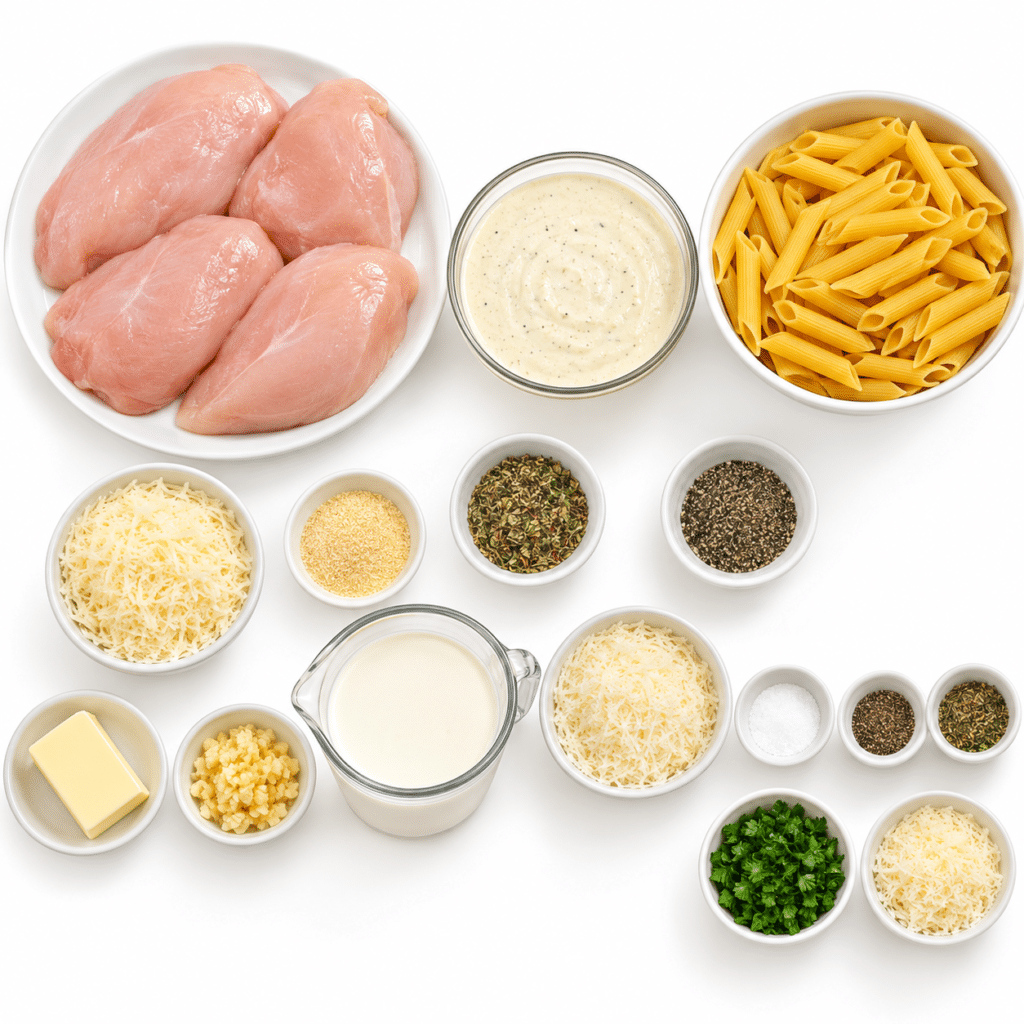
For the Caesar Chicken
- 4 boneless, skinless chicken breasts
- 1 cup Caesar dressing
- 1 cup grated Parmesan cheese
- 1 tsp garlic powder
- 1 tsp Italian seasoning
- ½ tsp black pepper
For the Creamy Parmesan Pasta
- 12 oz penne or fettuccine
- 2 tbsp butter
- 3 cloves garlic, minced
- 1½ cups heavy cream
- 1 cup grated Parmesan cheese
- ½ tsp salt
- ½ tsp black pepper
- ½ tsp Italian seasoning
For Garnishing
- Chopped fresh parsley, optional
- Extra Parmesan, optional
Preparation Step by Step
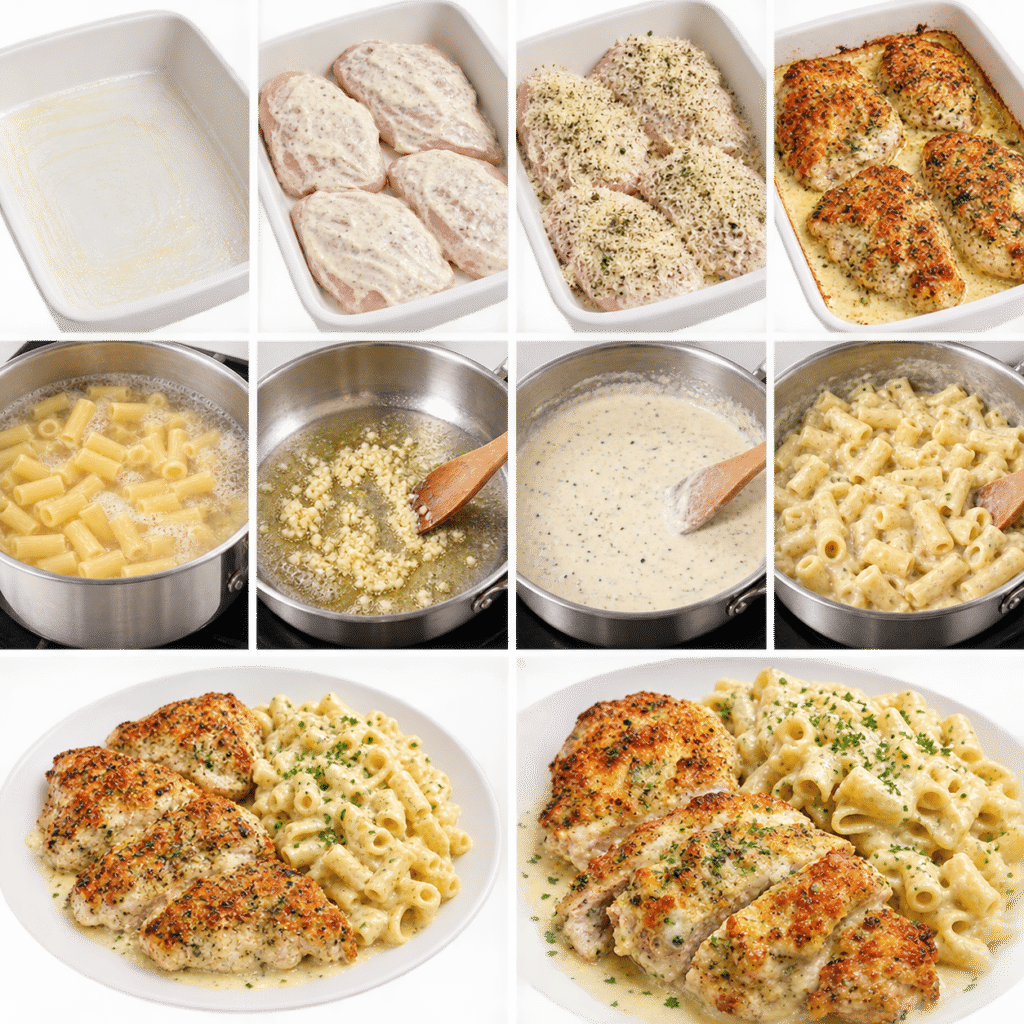
1. Preheat the Oven
Begin by preheating your oven to 375°F (190°C).
Lightly grease a baking dish large enough to hold the four chicken breasts without crowding them too tightly.
Giving the oven enough time to fully preheat is important. A properly heated oven helps the chicken begin cooking immediately and encourages the Parmesan topping to become golden.
2. Prepare the Chicken
Pat the chicken breasts dry with paper towels.
This small step is useful because removing excess surface moisture helps the Caesar dressing adhere more effectively.
If the chicken breasts are very thick, place them between two pieces of plastic wrap or parchment paper and gently pound them to a more even thickness.
Don’t flatten them too aggressively. The goal is simply to make them cook more evenly.
3. Coat with Caesar Dressing
Place the chicken breasts directly into the prepared baking dish.
Spoon the Caesar dressing over each piece.
Use the back of a spoon or a pastry brush to spread the dressing evenly across the top and sides of the chicken.
The creamy dressing acts as both a source of flavor and a protective layer that helps keep the chicken moist while baking.
Make sure each breast receives a generous coating.
4. Add the Parmesan Seasoning
Sprinkle the grated Parmesan evenly over the chicken.
Follow with the garlic powder, Italian seasoning, and black pepper.
Try to distribute the Parmesan and seasonings across the entire surface rather than concentrating them in one area.
As the chicken bakes, the Parmesan combines with the Caesar dressing to form a flavorful, golden topping.
5. Bake the Chicken
Place the baking dish in the preheated oven.
Bake uncovered for approximately 30–35 minutes, depending on the thickness of the chicken breasts.
The exact cooking time can vary, so don’t rely solely on the clock.
The safest way to determine doneness is to check the thickest part of the chicken with an instant-read thermometer. The internal temperature should reach 165°F (74°C).
The surface should look golden and lightly browned, while the chicken should remain juicy inside.
6. Let the Chicken Rest
Once cooked, remove the chicken from the oven.
Let it rest for about 5 minutes before serving.
Resting gives the juices a chance to redistribute throughout the meat.
If you slice the chicken immediately, more of those flavorful juices can escape onto the plate instead of staying inside the chicken.
7. Cook the Pasta
While the chicken is baking, bring a large pot of salted water to a boil.
Add the penne or fettuccine and cook according to the package directions until al dente.
You want the pasta tender but still slightly firm in the center.
Before draining, consider reserving a small amount of pasta water.
Although it isn’t specifically required in the ingredient list, it can be useful if the Parmesan sauce becomes thicker than desired.
Drain the pasta and set it aside.
8. Start the Garlic Butter Base
Place a large skillet over medium heat.
Add the 2 tablespoons of butter.
Once the butter has melted, add the minced garlic.
Sauté for approximately 30 seconds, stirring constantly.
The garlic should become fragrant and lightly softened.
Avoid letting it turn dark brown.
9. Add the Heavy Cream
Slowly pour the 1½ cups heavy cream into the skillet.
Stir gently to combine it with the garlic butter.
Allow the cream to come to a gentle simmer.
Cook for approximately 2–3 minutes, stirring occasionally.
The goal isn’t to boil the cream aggressively. A gentle simmer gives the sauce time to develop while reducing the risk of scorching.
10. Build the Parmesan Sauce
Reduce the heat slightly.
Add the grated Parmesan gradually, stirring continuously.
Rather than adding all the cheese at once, sprinkle it in several additions.
Allow each portion to melt into the cream before adding more.
This technique helps create a smoother sauce.
Continue stirring until the Parmesan has completely melted and the sauce looks creamy and cohesive.
11. Season the Sauce
Add the salt, black pepper, and Italian seasoning.
Stir thoroughly.
Taste carefully before adding additional salt.
The Parmesan and Caesar dressing both contain salt, so the sauce may already have enough seasoning.
If you want more garlic flavor, a very small amount of freshly grated garlic can be added, but the existing garlic butter base should already provide plenty of aroma.
12. Add the Pasta
Add the drained pasta directly to the skillet.
Use tongs or a large spoon to gently toss the pasta through the Parmesan sauce.
Continue mixing until every piece of penne or every strand of fettuccine is coated.
If the sauce seems too thick, add a small splash of reserved pasta water.
Add it gradually rather than all at once.
The goal is a sauce that is creamy enough to coat the pasta while remaining loose enough to flow gently around each piece.
13. Finish the Pasta
Let the pasta warm through in the sauce for approximately 1 minute.
Stir gently so the sauce doesn’t stick to the bottom of the skillet.
At this point, the pasta should look glossy and creamy.
If using fettuccine, gently lift the noodles with tongs to help distribute the sauce evenly.


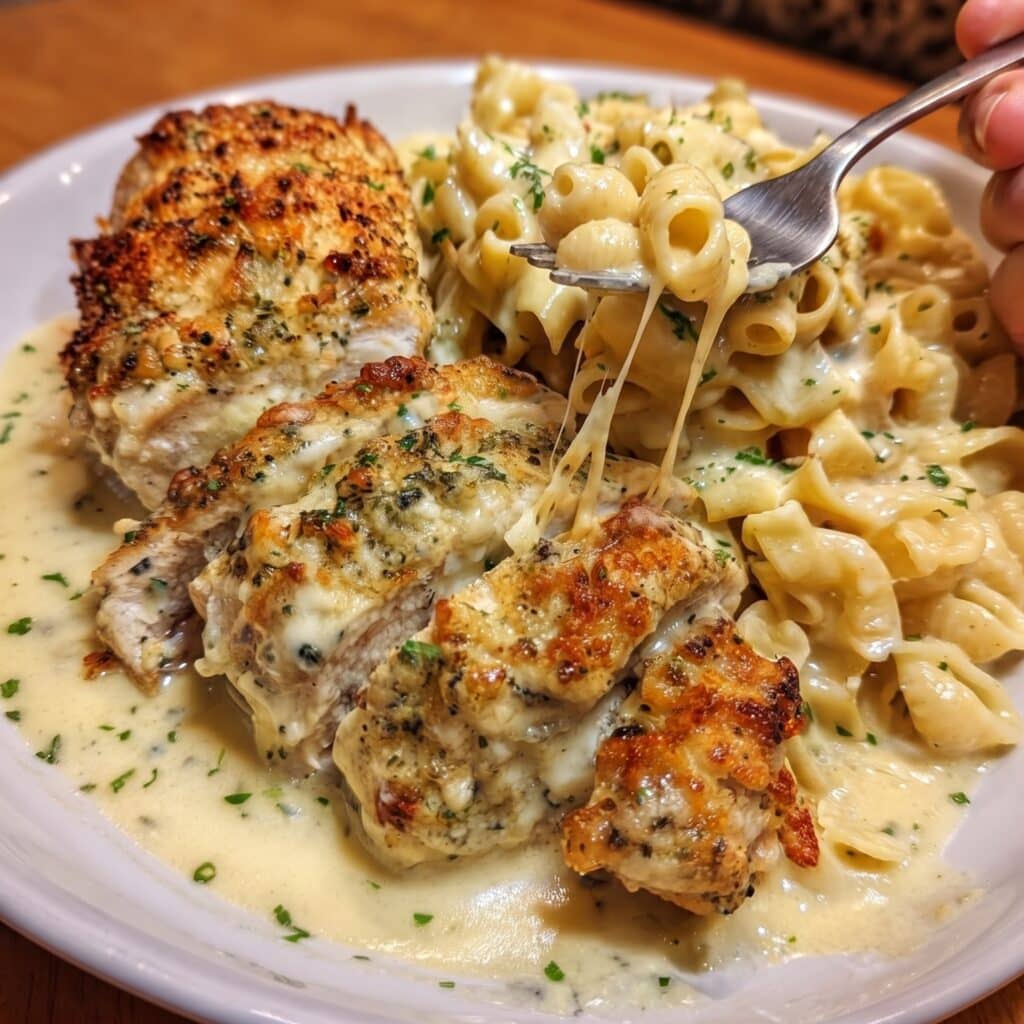
14. Plate the Chicken and Pasta
Spoon a generous portion of creamy Parmesan pasta onto each plate.
Place a baked Caesar chicken breast alongside the pasta or slice the chicken into thick pieces and arrange it over the top.
For an especially attractive presentation, spoon a little of the creamy sauce around the pasta rather than covering everything completely.
15. Garnish and Serve
Finish with freshly chopped parsley and a light sprinkle of additional Parmesan.
Serve immediately.
The contrast between the warm, golden Caesar chicken and the creamy Parmesan pasta is at its best while everything is fresh from the kitchen.
Tips for a Perfect Result
Don’t Overbake the Chicken
Chicken breasts can dry out when cooked for too long.
Because their thickness varies, use an instant-read thermometer rather than relying exclusively on the 30–35 minute cooking window.
Use Evenly Sized Chicken
If one breast is much thicker than another, it may require significantly more time.
Pounding thicker pieces gently to an even thickness helps everything finish at approximately the same time.
Keep the Sauce at a Gentle Heat
Creamy cheese sauces don’t need high heat.
Too much heat can make the dairy separate or cause the cheese to become stringy.
Keep the skillet around medium to medium-low once the Parmesan is added.
Add Parmesan Gradually
This is one of the easiest ways to achieve a smoother sauce.
Adding the cheese slowly gives it time to melt properly into the cream.
Don’t Forget the Pasta Water
A little starchy pasta water can transform an overly thick sauce.
Add it one tablespoon at a time until the consistency is silky.
Serve Immediately
Cream sauces naturally thicken as they cool.
This dish is at its creamiest immediately after preparation.
How to Make It Even Better
The key to this recipe is contrast.
The chicken should be tender with a savory, lightly golden Parmesan-Caesar topping, while the pasta should remain silky and creamy.
For an even more flavorful chicken, allow the seasoned breasts to sit in the Caesar dressing for about 15–20 minutes before baking if you have extra time.
For the pasta, freshly grated Parmesan makes a major difference in texture.
You can also add a small pinch of crushed red pepper flakes to the sauce if you enjoy a subtle spicy finish.
A little freshly cracked black pepper over the finished plate gives the dish an appealing restaurant-style touch.
Add Vegetables
If you want to make the meal more balanced, serve the pasta with roasted broccoli, asparagus, green beans, or a simple green salad.
For a lighter, more healthy / minceur approach, increase the vegetable portion and serve a smaller amount of pasta alongside the chicken.
An air fryer can make an excellent side dish here. Air-fried broccoli or zucchini develops lightly crisp edges while staying tender inside.
If you’re comparing options for the best air fryer 2026, practical features such as basket size, temperature control, easy cleanup, and everyday convenience are generally more useful than simply choosing the most powerful model.
Use a Robot Pâtissier for Homemade Bread
A robot pâtissier isn’t necessary for this recipe, but it becomes useful if you want to make homemade dinner rolls or garlic bread to serve alongside the chicken.
Fresh bread is particularly delicious with creamy Parmesan sauce because it gives you something to soak up every last spoonful.
Useful Kitchen Equipment
The ustensiles cuisine indispensables for this recipe are straightforward:
- Baking dish
- Large pot
- Large skillet
- Whisk or wooden spoon
- Tongs
- Instant-read thermometer
- Colander
- Cheese grater
- Sharp knife
A meilleur blender cuisine can also be useful in a broader kitchen setup for homemade soups, dressings, sauces, and other recipes, although you won’t need one for this particular dish.
Variations to Try
Creamy Spinach Parmesan Pasta
Add a couple of handfuls of fresh spinach to the sauce just before adding the pasta.
Allow it to wilt completely.
The spinach adds color and a mild vegetal flavor.
Mushroom Parmesan Pasta
Sauté sliced mushrooms in the butter before adding the garlic.
Cook until golden, then continue with the cream sauce.
The earthy mushrooms work beautifully with Parmesan and chicken.
Cajun Caesar Chicken
For a little extra heat, season the chicken with ½–1 teaspoon Cajun seasoning along with the existing spices.
This creates a bolder variation without changing the cooking method.
Broccoli Caesar Chicken
Add lightly steamed broccoli to the baking dish around the chicken during the final portion of cooking.
You can also serve roasted or air-fried broccoli separately.
Extra-Cheesy Pasta
For an even richer pasta, stir in a small amount of shredded mozzarella after the Parmesan melts.
Keep the amount moderate so the sauce remains smooth rather than becoming excessively thick.
Lemon Parmesan Finish
A small squeeze of fresh lemon juice over the chicken immediately before serving can add brightness and help balance the richness of the creamy pasta.
What to Serve with Baked Caesar Chicken
Because this meal is rich and creamy, fresh or lightly roasted sides work particularly well.
Try serving it with:
- Crisp green salad
- Roasted broccoli
- Air-fried asparagus
- Garlic green beans
- Steamed vegetables
- Roasted zucchini
- Tomato cucumber salad
- Garlic bread
- Homemade dinner rolls
A simple salad with a light vinaigrette is especially good because its acidity cuts through the creamy Parmesan sauce.
For a cozy dinner, garlic bread and a green salad are more than enough to turn this recipe into a complete meal.
After dinner, a freshly brewed coffee prepared with a machine à café can make a simple and satisfying finish. A smooth espresso or black coffee pairs nicely with the savory richness of Parmesan and cream.
Storage and Reheating
Store leftover chicken and pasta separately when possible.
Place both in airtight containers and refrigerate within a reasonable time after cooking.
The leftovers are best enjoyed within 3–4 days.
The Parmesan cream sauce will naturally become thicker in the refrigerator.
When reheating the pasta, place it in a skillet over low heat and add a small splash of milk, cream, or chicken broth.
Stir gently until the sauce loosens and becomes creamy again.
Avoid using very high heat because the dairy-based sauce can separate.
The chicken can be reheated gently in the oven or microwave until hot throughout.
If using a microwave, cover the chicken loosely and heat in short intervals to help prevent it from drying out.
Frequently Asked Questions
Can I use chicken thighs instead of chicken breasts?
Yes. Boneless, skinless chicken thighs work very well and are naturally more forgiving because they contain more fat. Adjust the cooking time according to their size and verify that they reach 165°F (74°C) internally.
Can I use a different type of pasta?
Absolutely. Penne and fettuccine are both excellent, but linguine, rigatoni, spaghetti, or rotini can also work. Short ridged pasta shapes are particularly good at capturing creamy Parmesan sauce.
Can I prepare the chicken ahead of time?
Yes. You can coat the chicken with Caesar dressing and seasonings several hours ahead and keep it refrigerated until you’re ready to bake it. Keep it properly chilled until cooking.
Why is my Parmesan sauce too thick?
The sauce naturally thickens as the cheese melts and as it cools. Add reserved pasta water, milk, or a small amount of cream gradually while stirring until you reach the desired consistency.
Can I make this recipe lighter?
Yes. Use a smaller pasta portion, increase vegetables, and serve the chicken with a generous salad or roasted vegetables. You can also reduce the amount of cream and cheese, although the final sauce will be less rich and thick.
Conclusion
Baked Caesar Chicken with Creamy Parmesan Pasta is the kind of comforting dinner that deserves a regular place in your recipe rotation.
The chicken is simple but full of flavor, thanks to the creamy Caesar dressing, Parmesan, garlic powder, and Italian seasoning. Baking creates a delicious golden topping while keeping the inside tender and juicy.
Then comes the pasta: buttery garlic, heavy cream, Parmesan, and herbs combine into a smooth sauce that coats every piece of penne or strand of fettuccine.
Together, the two components create a meal that feels indulgent, comforting, and wonderfully homemade without requiring complicated cooking techniques.
For the best results, don’t overcook the chicken, keep the cream sauce at a gentle temperature, add Parmesan gradually, and use a little pasta water whenever the sauce needs loosening.
Add a crisp salad or roasted vegetables on the side, finish with fresh parsley and Parmesan, and serve everything while it’s hot and creamy.
Ingredients
Method
- Preheat your oven to 375°F (190°C) and lightly grease a baking dish.
- Place the chicken breasts in the dish and coat them evenly with Caesar dressing.
- Sprinkle Parmesan cheese, garlic powder, Italian seasoning, and black pepper over the chicken.
- Bake uncovered for 30 to 35 minutes, or until the chicken is cooked through and golden on top.
- While the chicken bakes, cook the pasta according to package directions, then drain.
- In a large skillet, melt butter over medium heat and sauté the garlic for about 30 seconds.
- Pour in the heavy cream and let it simmer for 2 to 3 minutes.
- Stir in the Parmesan, salt, pepper, and Italian seasoning until the sauce is smooth and creamy.
- Add the cooked pasta to the sauce and toss until fully coated.
- Serve the creamy pasta with the baked Caesar chicken on the side. Garnish if desired.