
Some pasta dinners are simply impossible to resist, and this Baked Italian Sausage Rigatoni with Creamy Ricotta Mozzarella Sauce is a perfect example. Tender rigatoni, savory Italian sausage, rich marinara, and a touch of heavy cream come together in a comforting tomato sauce, while creamy ricotta pockets and golden melted mozzarella make every bite extra satisfying.
This easy baked rigatoni recipe brings together everything you love about Italian-inspired comfort food without requiring complicated techniques or hours in the kitchen. The sausage adds a deliciously seasoned, meaty flavor, the ricotta creates creamy layers throughout the casserole, and the mozzarella melts into a wonderfully cheesy topping.
Whether you’re preparing a relaxed family dinner, feeding friends on the weekend, or looking for a make-ahead meal for a busy evening, this baked pasta casserole deserves a place in your regular rotation. Serve it straight from the oven with a crisp green salad and warm garlic bread for a hearty meal everyone can enjoy.
Table of Contents
Table of Contents
Why You’ll Love This Baked Italian Sausage Rigatoni
- Rich and creamy sauce: Marinara and heavy cream combine to create a smooth tomato sauce that coats every piece of rigatoni.
- Savory Italian sausage: Browned sausage brings plenty of flavor and makes the casserole hearty and satisfying.
- Creamy ricotta pockets: Ricotta mixed with mozzarella creates soft, cheesy layers throughout the pasta.
- Golden mozzarella topping: The cheese melts beautifully in the oven and develops appetizing golden spots.
- Simple ingredients: You can make this comforting dinner with familiar supermarket ingredients.
- Perfect for sharing: A 9 × 13-inch baking dish makes it ideal for family meals, casual gatherings, and potlucks.
- Easy to prepare ahead: Assemble the casserole in advance and bake it when you’re ready to eat.
Choose Your Ingredients for the Best Results
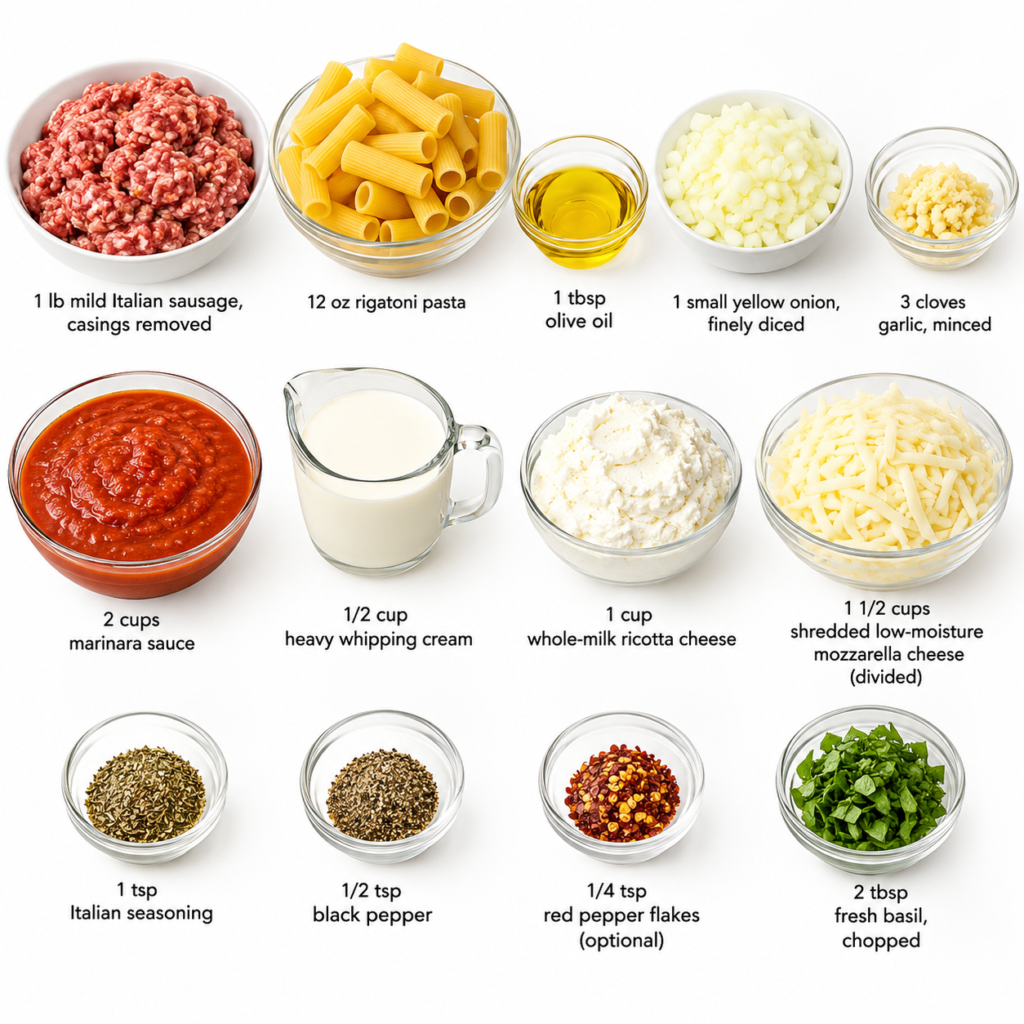
A few thoughtful ingredient choices can make a noticeable difference in the flavor, texture, and overall success of your baked rigatoni.
Italian Sausage
Mild Italian sausage gives the casserole a savory, well-seasoned flavor without overwhelming the creamy tomato sauce. Removing the casings allows the sausage to break into small pieces that distribute evenly throughout the pasta.
If you prefer a little heat, hot Italian sausage is an excellent alternative. You can also use a combination of mild and spicy sausage for a more balanced flavor.
Rigatoni Pasta
Rigatoni is particularly well suited to baked pasta dishes because its large tubes and ridged surfaces hold onto the sauce. The hollow centers also capture little pieces of sausage and creamy tomato sauce.
Cook the pasta for approximately two minutes less than the package directions. It will continue cooking in the oven, and slightly undercooking it initially helps prevent a soft or mushy casserole.
Marinara Sauce
A good-quality marinara sauce provides the tomato base and much of the dish’s flavor. Choose one you already enjoy eating, preferably with a balanced tomato flavor and Italian herbs.
If your marinara is particularly thick, a small splash of water can help loosen it. If it is very acidic, the heavy cream and ricotta will help soften its sharper notes.
Heavy Whipping Cream
Heavy cream transforms ordinary marinara into a richer, smoother sauce. It adds a velvety texture and creates a lovely contrast with the savory sausage and tangy tomato flavor.
For the best consistency, stir the cream into the sauce over low heat rather than allowing the mixture to boil vigorously.
Whole-Milk Ricotta
Whole-milk ricotta creates the creamy pockets that make this casserole special. Its mild flavor balances the seasoned sausage, while its soft texture contrasts with the firm rigatoni and melted mozzarella.
Stirring ricotta with a little mozzarella helps the mixture hold together and gives it an extra cheesy flavor.
Low-Moisture Mozzarella
Low-moisture mozzarella is an excellent choice for baked pasta because it melts well without releasing as much liquid as fresh mozzarella.
For the smoothest melting texture, shred a block of mozzarella yourself if possible. Pre-shredded cheese is convenient, but its added anti-caking ingredients can sometimes affect how smoothly it melts.
Fresh Garlic, Onion, and Basil
Yellow onion creates a flavorful base for the sausage, while fresh garlic adds depth to the sauce. Fresh basil, added after baking, brings a fragrant finish that complements the tomato, cream, and cheese.
Ingredients You’ll Need
Here is everything you need to prepare this comforting Italian sausage rigatoni casserole.
For the Pasta and Sausage Sauce
- 1 pound mild Italian sausage, casings removed
- 12 ounces rigatoni pasta
- 1 tablespoon olive oil
- 1 small yellow onion, finely diced
- 3 cloves garlic, minced
- 2 cups marinara sauce
- ½ cup heavy whipping cream
- 1 teaspoon Italian seasoning
- ½ teaspoon black pepper
- ¼ teaspoon red pepper flakes, optional
For the Creamy Ricotta Layer
- 1 cup whole-milk ricotta cheese
- ½ cup shredded low-moisture mozzarella cheese, taken from the total amount
For the Cheesy Topping
- 1 cup shredded low-moisture mozzarella cheese, reserved for the top
- 2 tablespoons fresh basil, chopped
The total mozzarella quantity is 1½ cups: ½ cup goes into the ricotta mixture, and the remaining 1 cup covers the casserole.
How to Make Baked Italian Sausage Rigatoni
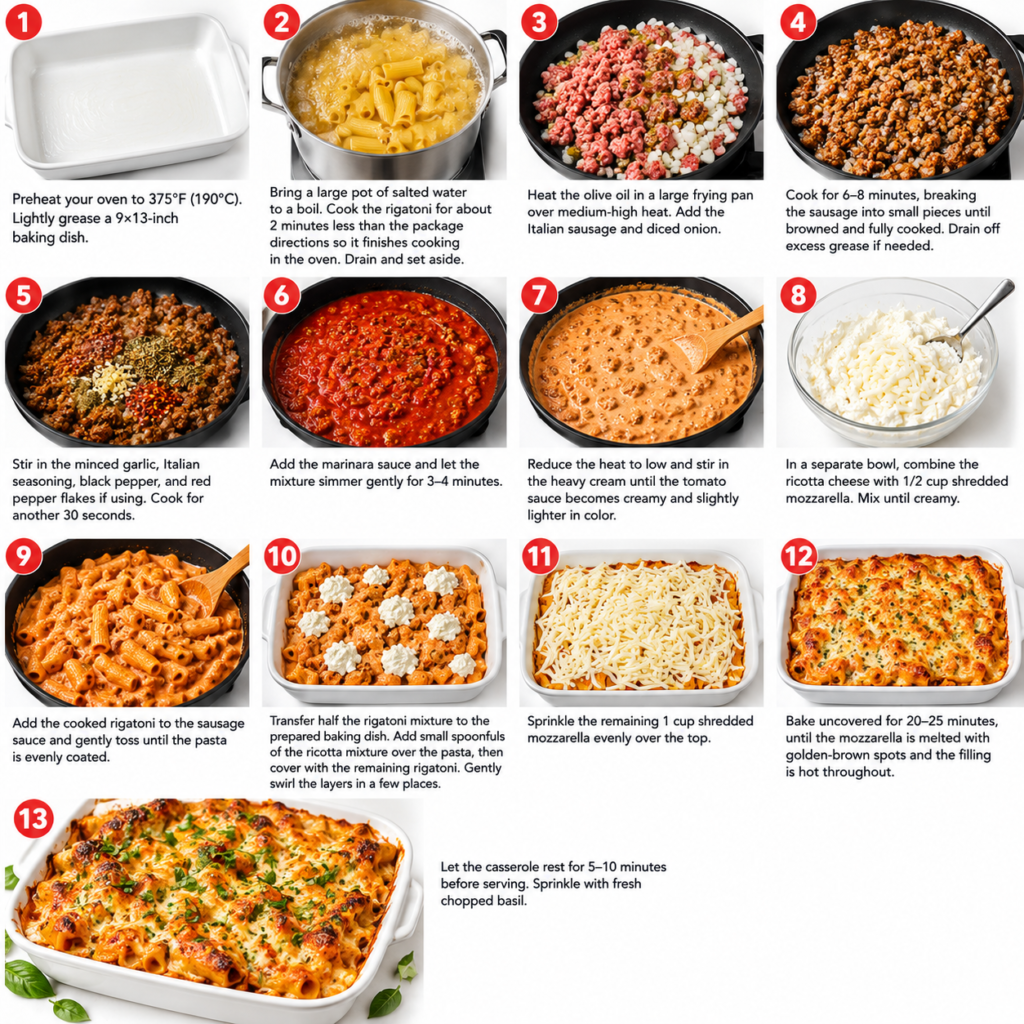
Follow these steps to create a creamy, cheesy baked pasta dish with a flavorful sausage sauce and beautifully melted mozzarella.
Step 1: Preheat the Oven
Preheat your oven to 375°F (190°C). Lightly grease a 9 × 13-inch baking dish with olive oil or cooking spray.
Preparing the dish before assembling the pasta helps prevent sticking and makes serving easier later.
Step 2: Cook the Rigatoni
Bring a large pot of generously salted water to a boil. Add the rigatoni and cook it for about two minutes less than the package recommends.
The pasta should be slightly firmer than you would normally serve because it will continue cooking in the oven as it absorbs some of the sauce.
Drain the pasta thoroughly and set it aside. Avoid rinsing it, since the remaining surface starch helps the sauce cling to the rigatoni.
Step 3: Brown the Italian Sausage and Onion
Heat the olive oil in a large frying pan over medium-high heat. Add the Italian sausage and finely diced onion.
Cook for 6–8 minutes, breaking the sausage into small crumbles with a wooden spoon or spatula. Continue cooking until the sausage is browned and fully cooked and the onion has softened.
If there is a large amount of excess grease in the pan, carefully drain some of it away. Leaving a little behind helps preserve the sausage’s flavor.
Step 4: Add the Garlic and Seasonings
Stir in the minced garlic, Italian seasoning, black pepper, and optional red pepper flakes.
Cook for approximately 30 seconds, stirring frequently. The garlic should become fragrant without browning too much, as burnt garlic can give the sauce a bitter taste.
The red pepper flakes add a gentle kick, but you can leave them out if you prefer a mild, family-friendly casserole.
Step 5: Add the Marinara Sauce
Pour the marinara sauce into the skillet and stir until it combines evenly with the sausage mixture.
Allow the sauce to simmer gently for 3–4 minutes. This short simmer gives the flavors time to blend and allows the sausage to season the tomato sauce.
If the mixture appears unusually thick, add a small splash of water. You want a sauce that coats the sausage while remaining loose enough to keep the pasta moist during baking.
Step 6: Make the Sauce Creamy
Reduce the heat to low and stir in the heavy whipping cream.
The sauce should become smoother, creamier, and slightly lighter in color. Warm it gently for a minute or two, stirring until the cream is fully incorporated.
Avoid a vigorous boil after adding the cream. Gentle heat helps maintain a smooth consistency and prevents the sauce from reducing too much before the pasta goes into the oven.
Step 7: Prepare the Ricotta Mixture
In a separate bowl, combine the whole-milk ricotta with ½ cup of shredded mozzarella.
Mix until the cheeses are evenly combined and creamy. A few small lumps of ricotta are perfectly fine.
This mixture will create pockets of rich, cheesy flavor throughout the casserole rather than turning the entire dish into one uniform sauce.
Step 8: Toss the Rigatoni with the Sausage Sauce
Add the cooked rigatoni to the skillet with the creamy sausage sauce. Gently toss until the pasta is evenly coated.
Make sure the sauce reaches the inside of the rigatoni tubes as well as the ridged outer surfaces. If the mixture seems too thick to coat the pasta comfortably, stir in a small splash of water.
Avoid stirring too aggressively, since the pasta should remain intact for layering.
Step 9: Assemble the Casserole
Transfer half of the sausage-coated rigatoni into the prepared baking dish, spreading it into an even layer.
Add small spoonfuls of the ricotta mixture over the pasta. Distribute them across the dish so each portion has a chance to contain some creamy cheese.
Cover with the remaining rigatoni mixture. Use a spoon to gently swirl the layers in a few places, allowing some ricotta to spread between the pasta without completely mixing it into the sauce.
This layering technique creates appealing pockets of creamy ricotta throughout the finished casserole.
Step 10: Add the Mozzarella Topping
Sprinkle the remaining 1 cup of shredded mozzarella evenly over the top.
Try to cover most of the surface so the cheese melts into a delicious, gooey layer. A few small gaps are fine and may allow the sauce to bubble through as the casserole bakes.
Step 11: Bake Until Golden and Bubbling
Place the uncovered baking dish in the preheated oven.
Bake for 20–25 minutes, or until the mozzarella has melted, the sauce is bubbling around the edges, and the top has developed golden-brown spots.
If you prefer a more deeply browned cheese topping, you can briefly use the broiler at the end, watching closely to prevent burning.
The casserole should be hot throughout. If it was assembled cold from the refrigerator, it will need additional baking time.
Step 12: Rest, Garnish, and Serve
Remove the casserole from the oven and allow it to rest for 5–10 minutes before serving.
Resting gives the sauce a little time to settle, making it easier to scoop neat portions without losing the creamy texture.
Finish with the chopped fresh basil just before serving. The fresh herbs add color, aroma, and a bright contrast to the rich cheese and sausage.
Serve warm while the mozzarella is still stretchy and the ricotta pockets are creamy.
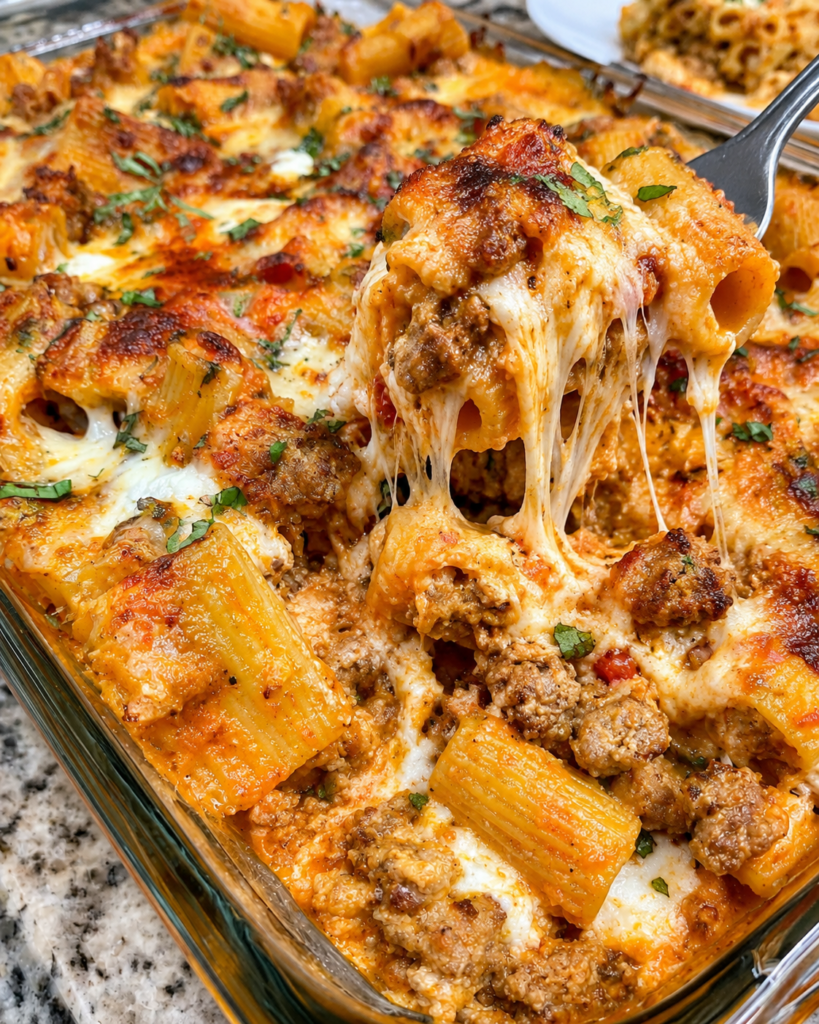
Tips for the Best Baked Rigatoni
Cook the pasta slightly under al dente. Rigatoni continues to soften in the oven. Removing it from the boiling water about two minutes early helps it retain a pleasant bite.
Brown the sausage properly. Let the meat develop golden-brown edges before adding the sauce. Browning adds depth and gives the casserole a more savory flavor.
Use gentle heat when adding the cream. A gentle simmer is enough to incorporate the cream into the marinara without making the sauce overly reduced.
Don’t overmix the ricotta. The goal is to keep distinct creamy pockets throughout the casserole. Stirring the ricotta completely into the sauce would eliminate that contrast.
Keep enough sauce around the pasta. The oven will continue cooking the rigatoni, so the pasta should be well coated before baking. If the sauce looks too thick, add a little water to loosen it.
Shred your mozzarella when possible. Freshly shredded cheese generally melts more smoothly and gives the topping a softer, more cohesive texture.
Let the casserole rest. Five to ten minutes of resting time makes serving easier and gives the sauce a chance to settle.
How to Make This Recipe Even Better
If you want to customize the casserole while keeping its creamy Italian-inspired character, a few small adjustments can make it feel even more special.
- Add extra herbs: A little dried oregano or fresh parsley can complement the Italian seasoning and basil.
- Include vegetables: Stir sautéed mushrooms, baby spinach, or finely diced bell peppers into the sausage sauce for extra variety.
- Build a deeper tomato flavor: Let the marinara simmer with the browned sausage for an additional minute or two before adding the cream.
- Add a Parmesan finish: If you have Parmesan on hand, sprinkle a little over the mozzarella before baking for a more savory, slightly nutty topping.
- Adjust the spice: Use hot Italian sausage or increase the red pepper flakes for a bolder version.
For the original recipe, the combination of sausage, marinara, cream, ricotta, and mozzarella already provides plenty of flavor. Additional ingredients are optional rather than necessary.
Easy Variations to Try
Spicy Italian Sausage Rigatoni
Replace the mild sausage with hot Italian sausage and include the red pepper flakes. The extra heat pairs beautifully with the creamy ricotta and mozzarella.
Three-Cheese Baked Rigatoni
Add a small handful of grated Parmesan to the ricotta mixture or sprinkle it over the top before baking. The extra cheese creates a deeper, more savory flavor.
Spinach and Ricotta Rigatoni
Fold a handful of fresh spinach into the warm sausage sauce before tossing it with the pasta. Allow the spinach to wilt, then assemble the casserole as directed.
If using frozen spinach, thaw it and squeeze out excess moisture first.
Mushroom Italian Sausage Rigatoni
Slice a few mushrooms and cook them with the onion until their moisture evaporates and they begin to brown. Continue with the sausage and sauce as directed.
Mushrooms add an earthy flavor that works especially well with the tomato cream sauce.
Extra-Creamy Rigatoni
For a richer result, you can increase the heavy cream slightly. Keep in mind that adding more cream will change the sauce balance, so make small adjustments rather than adding too much at once.
Meatless Baked Rigatoni
For a vegetarian variation, omit the sausage and sauté mushrooms, diced zucchini, or bell peppers with the onion and garlic. Continue with the marinara, cream, ricotta, and mozzarella.
Check the labels on your cheeses if strict vegetarian suitability is important, since some cheeses are made with animal-derived rennet.
What to Serve with Italian Sausage Rigatoni
This casserole is hearty enough to serve as the main dish, but a few simple sides can turn it into a complete dinner.
- Garlic bread: Crisp, buttery garlic bread is perfect for soaking up the creamy tomato sauce.
- Green salad: Lettuce, cucumber, tomatoes, and a light vinaigrette provide a refreshing contrast to the rich pasta.
- Roasted vegetables: Roasted broccoli, zucchini, or asparagus adds color and balances the cheesy casserole.
- Caprese salad: Fresh tomatoes, mozzarella, basil, and a drizzle of balsamic dressing complement the Italian-inspired flavors.
- Steamed green beans: A simple vegetable side keeps the meal balanced without competing with the main dish.
For a relaxed family dinner, serve the rigatoni directly from the baking dish with garlic bread and a fresh salad.
Make-Ahead Instructions
This recipe is convenient for busy evenings because you can prepare much of it ahead of time.
Prepare the sausage sauce, cook the pasta slightly under al dente, and combine the ricotta with mozzarella. Assemble the casserole in a suitable baking dish, cover it tightly, and refrigerate it if you plan to bake it within a day.
For the best texture, avoid leaving the pasta sitting in the sauce for too long before refrigerating, as it can continue absorbing liquid.
When ready to bake, remove the dish from the refrigerator while the oven preheats, following safe food-handling practices. Bake until the center is thoroughly hot and the cheese is melted and golden. A chilled casserole will usually require more time than one assembled while the ingredients are warm, so check the center rather than relying only on the original baking time.
If the baking dish is made of glass or ceramic, follow the manufacturer’s guidance about temperature changes to avoid thermal shock.
How to Store and Reheat Leftovers
Refrigerator
Allow the leftover casserole to cool slightly, then transfer it to airtight containers or cover the baking dish securely. Refrigerate within two hours of cooking.
Store leftovers in the refrigerator for 3–4 days.
Freezer
For longer storage, place cooled portions in freezer-safe containers. Seal well and label with the date.
For best quality, use frozen portions within approximately 2–3 months. The pasta and cheese may change texture slightly after thawing, but the dish should remain enjoyable.
Thaw frozen leftovers in the refrigerator before reheating when possible.
Reheating in the Oven
Preheat the oven to 350°F (175°C). Place the desired portion in an oven-safe dish, add a small splash of water or marinara if it appears dry, and cover loosely with foil.
Heat until the center reaches 165°F (74°C). Remove the foil toward the end if you want to refresh the melted cheese topping.
Reheating in the Microwave
Place an individual serving in a microwave-safe dish. Add a teaspoon or two of water or marinara to help loosen the sauce, then cover loosely.
Heat in short intervals, stirring gently when possible, until the portion is steaming hot throughout and reaches 165°F (74°C).
Frequently Asked Questions
1. Can I use a different pasta shape?
Yes. Penne, ziti, mezze rigatoni, and other sturdy short pasta shapes work well. Choose a shape that holds sauce and can be layered easily. Adjust the boiling time according to the package instructions and remove the pasta about two minutes early.
2. Can I use cottage cheese instead of ricotta?
You can substitute cottage cheese, although the texture will be slightly different. For a smoother layer, blend the cottage cheese before mixing it with the mozzarella. Whole-milk ricotta remains the best choice for the intended creamy texture.
3. Can I make this casserole without heavy cream?
Yes. You can replace the heavy cream with whole milk for a lighter sauce, although the finished casserole will be less rich. Add the milk gradually over low heat and avoid boiling the sauce vigorously.
4. Why is my baked rigatoni dry?
The pasta may have absorbed too much sauce, or it may have been overcooked before baking. Make sure the rigatoni is slightly undercooked initially and well coated with sauce before it goes into the oven. A small splash of water or marinara can help loosen the mixture if necessary.
5. How do I keep the ricotta from becoming watery?
Use whole-milk ricotta with a thick consistency. If your ricotta contains excess liquid, drain it briefly before mixing it with the mozzarella. Avoid adding watery vegetables unless you cook off their excess moisture first.
6. Can I assemble baked rigatoni the night before?
Yes. Assemble the casserole, cover it, and refrigerate it for up to about 24 hours before baking. Since the dish will be cold, allow extra oven time and check that the center is thoroughly hot before serving.
7. How can I make the cheese topping more golden?
Bake the casserole uncovered until the mozzarella melts and begins to brown. If you want more color, use the broiler for a brief final period, watching constantly because cheese can burn quickly.
8. Can I freeze baked Italian sausage rigatoni?
Yes. Cool the casserole, divide it into airtight freezer-safe portions, and freeze. Thaw in the refrigerator before reheating for more even results. The cheese texture may be slightly different after freezing, but the flavor should remain delicious.
Final Thoughts
This Baked Italian Sausage Rigatoni with Creamy Ricotta Mozzarella Sauce is the kind of comforting dinner that brings everyone to the table. With tender pasta, flavorful Italian sausage, creamy tomato sauce, pockets of ricotta, and a beautifully melted mozzarella topping, every serving offers a satisfying combination of textures and flavors.
It is simple enough for a family dinner yet special enough to share with guests, and the make-ahead option makes it even more practical for busy weeks. Pair it with garlic bread and a crisp salad for an easy, complete meal.
Save this recipe for the next time you’re craving a cheesy baked pasta dinner, and enjoy the delicious combination of Italian sausage, creamy ricotta, and golden mozzarella straight from the oven.
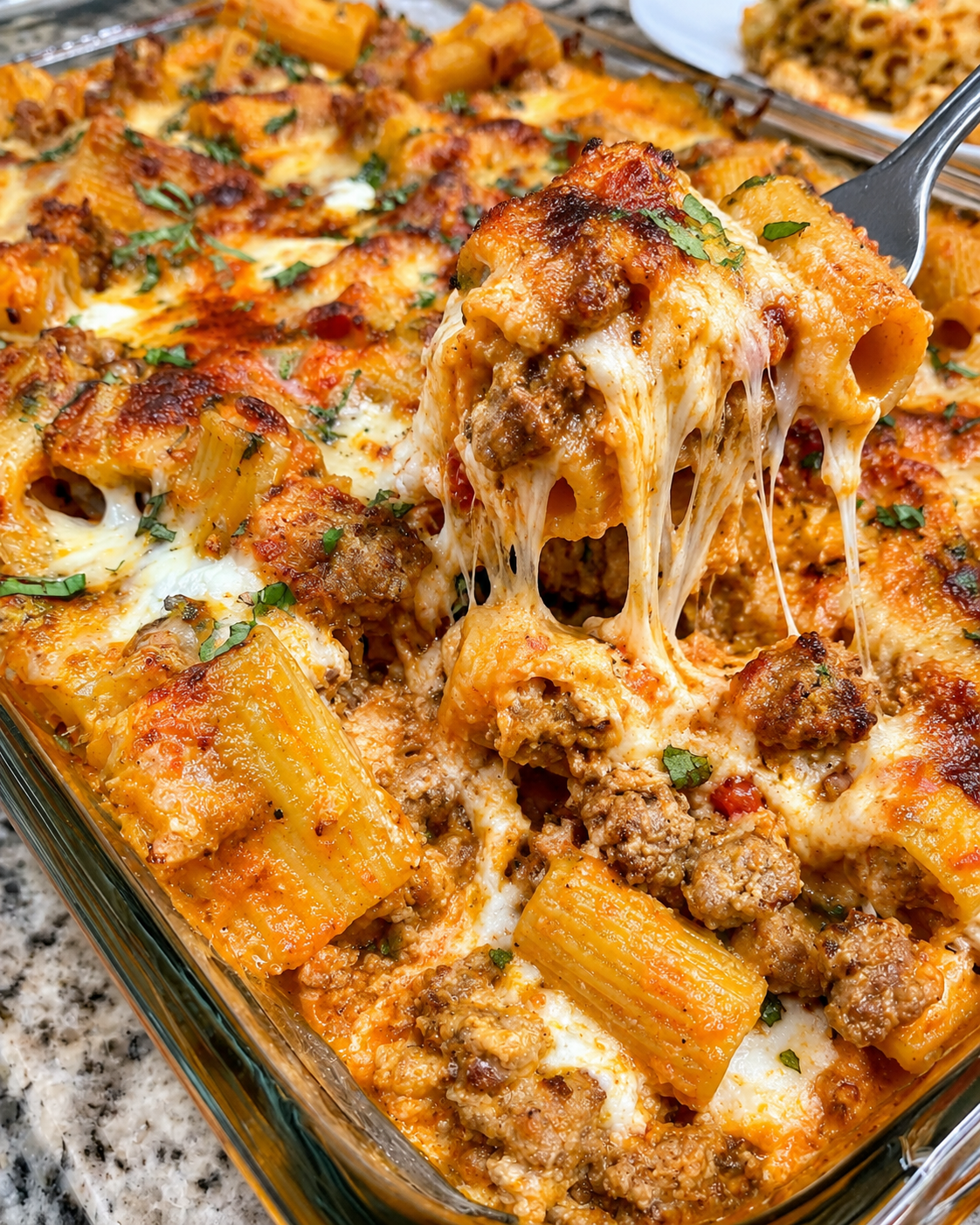
Ingredients
Method
- Preheat your oven to 375°F (190°C). Lightly grease a 9×13-inch baking dish.
- Bring a large pot of salted water to a boil. Cook the rigatoni for about 2 minutes less than the package directions so it finishes cooking in the oven. Drain and set aside.
- Heat the olive oil in a large frying pan over medium-high heat. Add the Italian sausage and diced onion.
- Cook for 6–8 minutes, breaking the sausage into small pieces until browned and fully cooked. Drain off excess grease if needed.
- Stir in the minced garlic, Italian seasoning, black pepper, and red pepper flakes if using. Cook for another 30 seconds.
- Add the marinara sauce and let the mixture simmer gently for 3–4 minutes.
- Reduce the heat to low and stir in the heavy cream until the tomato sauce becomes creamy and slightly lighter in color.
- In a separate bowl, combine the ricotta cheese with 1/2 cup shredded mozzarella. Mix until creamy.
- Add the cooked rigatoni to the sausage sauce and gently toss until the pasta is evenly coated.
- Transfer half the rigatoni mixture to the prepared baking dish. Add small spoonfuls of the ricotta mixture over the pasta, then cover with the remaining rigatoni. Gently swirl the layers in a few places to distribute the ricotta without completely mixing it away.
- Sprinkle the remaining 1 cup shredded mozzarella evenly over the top.
- Bake uncovered for 20–25 minutes, until the mozzarella is melted with golden-brown spots and the filling is hot throughout.
- Let the casserole rest for 5–10 minutes before serving. Sprinkle with fresh chopped basil.