
Some pasta dinners are simply impossible to resist, and Garlic Butter Beef Fettuccine in Creamy Mozzarella Bolognese Sauce is exactly that kind of meal. It combines everything you want from a comforting homemade dinner: deeply browned ground beef, fragrant garlic, buttery richness, a tomato-based sauce, silky heavy cream, and plenty of melted mozzarella and Parmesan.
The first time you make this recipe, the aroma coming from the skillet tells you almost everything you need to know. The beef browns in butter and olive oil, the onions soften, and the garlic brings everything together. Then tomato sauce and tomato paste create a rich savory base before cream cheese, mozzarella, and Parmesan transform it into something incredibly creamy.
And then there is the fettuccine.
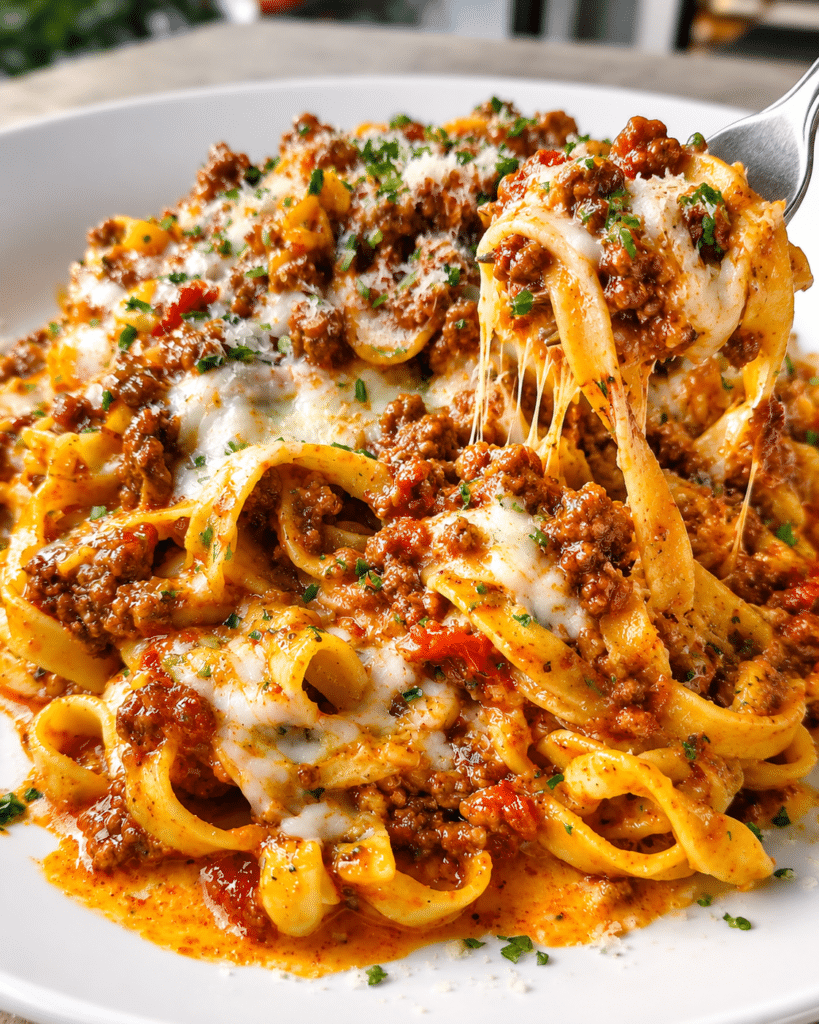
Those wide, tender ribbons are perfect for this sauce because they hold onto the creamy beef mixture beautifully. Every forkful brings together pasta, seasoned beef, tomato, garlic, and melted cheese.
This is not a complicated restaurant-style dish that requires special techniques. It is a generous, family-friendly pasta recipe made with familiar ingredients and straightforward cooking methods. It is equally suitable for a cozy weekend dinner or a satisfying weeknight meal when you want something that feels a little more special.
The combination of tomato and cream gives the sauce a balanced flavor, while the mozzarella creates a wonderfully smooth, cheesy finish. A little Parmesan adds nuttiness and depth, while fresh parsley and chives brighten the finished dish.
If you’re searching for a creamy beef pasta recipe that is rich, hearty, cheesy, and packed with garlic butter flavor, this fettuccine belongs on your dinner table.
Table of Contents
Table of Contents
Choose Your Ingredients
A recipe this comforting depends on a few simple ingredients working together perfectly. Choosing good-quality ingredients can make a noticeable difference in the finished sauce.
For the beef, an 80/20 ground beef blend is particularly flavorful because the fat helps create beautifully browned, juicy crumbles. If you prefer a leaner option, you can certainly use lean ground beef, but you may need a little extra butter or olive oil to prevent the meat from becoming dry.
Fettuccine is ideal because its broad shape gives the creamy sauce plenty of surface area to cling to. Cook it only until al dente so the pasta maintains enough structure after being tossed with the hot sauce.
Fresh garlic is essential here. Six cloves may sound generous, but garlic is one of the defining flavors of this recipe. Mince it finely so it distributes evenly throughout the sauce.
Tomato sauce and tomato paste create the savory foundation. The tomato paste adds concentrated flavor and helps the sauce develop more depth. A small amount of sugar can soften the natural acidity of the tomatoes without making the dish sweet.
Heavy cream and cream cheese provide the luxurious texture, while mozzarella and Parmesan give the sauce its cheesy character.
Finally, fresh parsley and chives add color and a fresh finish that helps balance the richness.
Ingredient Tips
- Use freshly grated Parmesan when possible for a smoother sauce.
- Softened cream cheese blends more easily into the warm cream.
- Freshly minced garlic gives a much stronger flavor than pre-minced garlic.
- Don’t skip the tomato paste because it adds concentrated tomato flavor.
- An 80/20 beef blend gives the sauce extra richness.
- Bring the cream cheese to room temperature before cooking.
- Use good-quality mozzarella that melts easily.
- Salt the pasta water generously because it seasons the fettuccine from the inside.
- Save a little pasta water if you need to loosen the finished sauce.
- Fresh herbs are best added after removing the skillet from the heat.
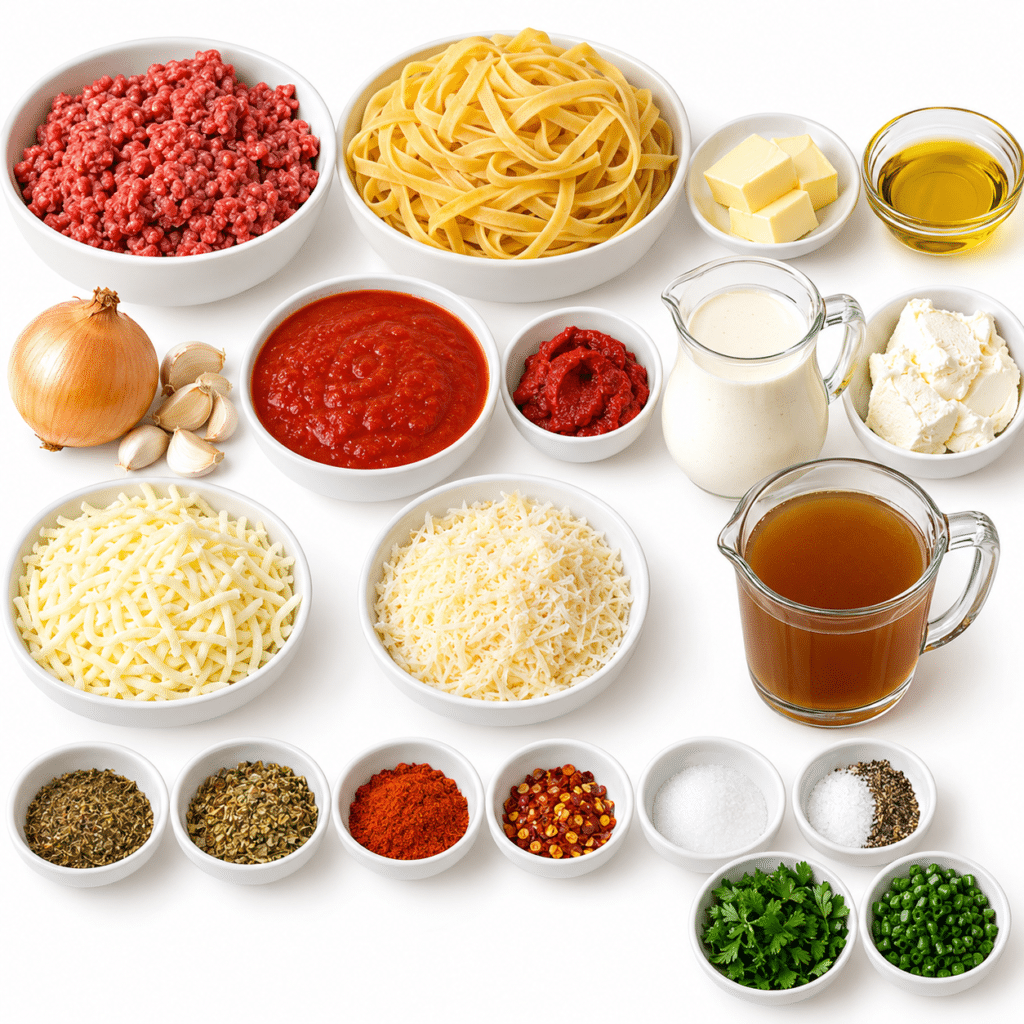
What Ingredients Do You Need?
For the Fettuccine
- 1 lb fettuccine pasta
- Salt, for the pasta water
For the Creamy Beef Bolognese Sauce
- 1 lb ground beef, preferably 80/20
- 4 tbsp unsalted butter
- 2 tbsp olive oil
- 1 medium yellow onion, finely chopped
- 6 cloves garlic, minced
- 1 can (15 oz) tomato sauce
- ¼ cup tomato paste
- 1½ cups heavy cream
- 4 oz cream cheese, softened
- 1½ cups shredded mozzarella cheese
- ½ cup freshly grated Parmesan cheese
- ½ cup beef broth
- 1 tbsp Italian seasoning
- 1 tsp dried oregano
- 1 tsp smoked paprika
- ½ tsp red pepper flakes
- 1 tsp sugar
- Salt, to taste
- Black pepper, to taste
- Fresh parsley, chopped, for garnish
- Fresh chives, chopped, for garnish
Preparation Step by Step
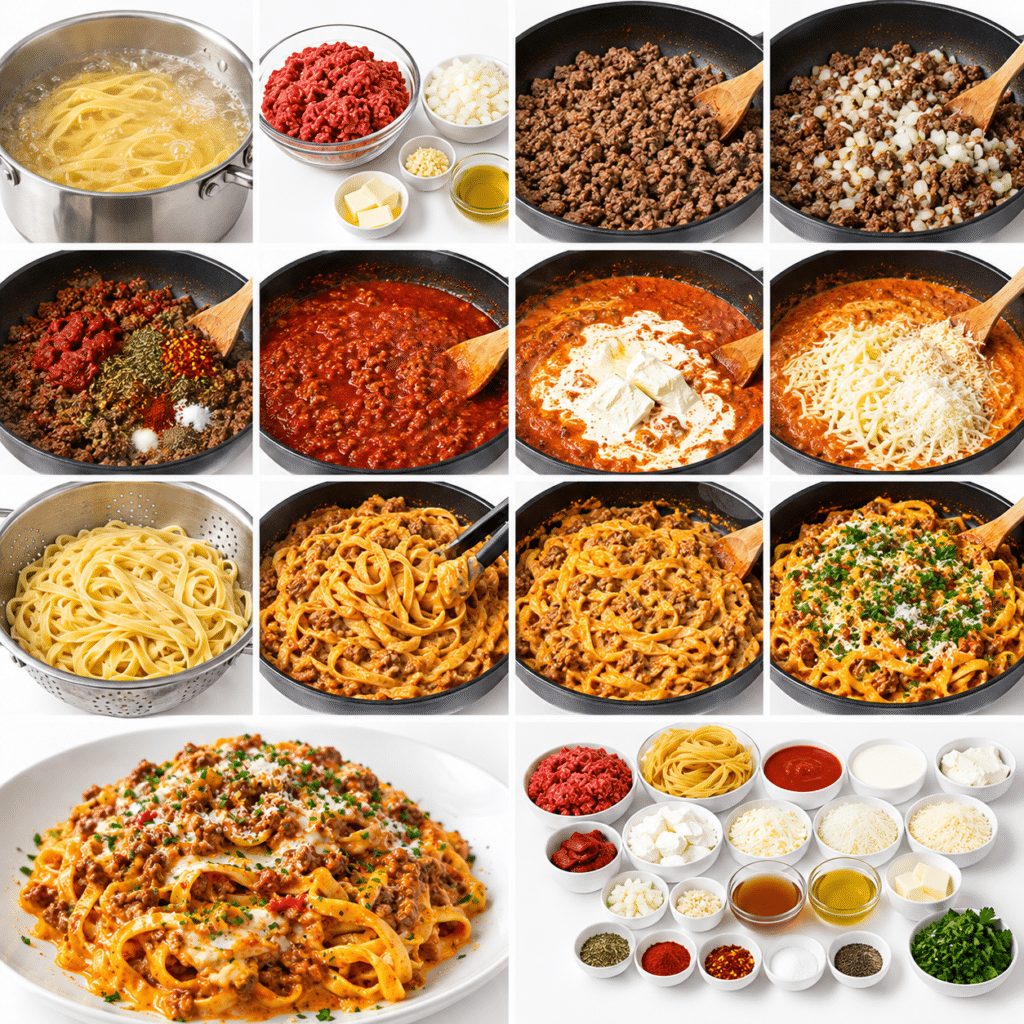
1. Bring the Pasta Water to a Boil
Start by filling a large pot with plenty of water.
Add a generous amount of salt and bring the water to a rolling boil over high heat.
Salting the water is important because it gives the fettuccine its first layer of seasoning. The pasta should taste flavorful rather than bland before it ever reaches the sauce.
Once the water is boiling, add the fettuccine.
2. Cook the Fettuccine Until Al Dente
Cook the pasta according to the package instructions, but begin checking it toward the lower end of the recommended cooking time.
You want the fettuccine to be al dente—tender but still slightly firm in the center.
This matters because the pasta will continue cooking briefly when it is tossed with the hot sauce.
Avoid overcooking it at this stage. Soft pasta can become mushy once combined with the creamy sauce.
Once cooked, drain the fettuccine well and set it aside.
If you have room in your kitchen routine, reserve a small amount of pasta water before draining. Its starch can be useful if the finished sauce needs loosening.
3. Heat the Skillet
While the pasta cooks, place a large, deep skillet over medium-high heat.
Add the olive oil and 2 tablespoons of the butter.
Let the butter melt completely.
The combination of olive oil and butter provides both flavor and a good cooking base for browning the beef.
The skillet should be hot before the beef goes in. A properly heated pan encourages browning rather than allowing the meat to simply steam.
4. Brown the Ground Beef
Add the ground beef to the skillet.
Use a wooden spoon or sturdy spatula to break it into small crumbles as it cooks.
Spread the beef across the pan and allow it to cook for several minutes without constantly stirring. This gives the meat time to develop browned edges.
Continue cooking until the beef is deeply browned and no longer pink.
The browning is important because it creates savory flavors that become part of the final sauce.
If your beef releases a significant amount of excess fat, carefully drain some of it. Don’t remove every bit of fat, however, because a small amount contributes flavor and richness.
5. Add the Onion
Once the beef has browned, add the finely chopped yellow onion.
Stir everything together and cook until the onion becomes soft and translucent.
This usually takes several minutes.
Take your time here. Properly softened onions bring natural sweetness to the sauce and help balance the acidity of the tomato.
6. Add the Garlic
Add the minced garlic.
Stir it into the beef and onion mixture and cook briefly, approximately 30–60 seconds.
The moment the garlic becomes fragrant, move to the next step.
Garlic cooks quickly. If it becomes dark brown or burnt, it can introduce an unpleasant bitterness.
7. Build the Seasoning Base
Add the tomato paste, Italian seasoning, dried oregano, smoked paprika, and red pepper flakes.
Sprinkle in the sugar along with salt and black pepper to taste.
Stir thoroughly so the seasonings coat the beef, onion, and garlic.
Allow this mixture to cook for about 1 minute.
Cooking the tomato paste briefly in the butter and beef mixture helps intensify its flavor and gives the sauce a deeper character.
The smoked paprika contributes subtle smokiness, while the Italian seasoning and oregano create the familiar herbaceous flavor associated with a hearty pasta sauce.
8. Add the Tomato Sauce
Pour the tomato sauce into the skillet.
Stir thoroughly, scraping the bottom of the pan to incorporate any browned bits left behind from the beef.
These browned pieces are packed with flavor.
The sauce should now take on a rich red color and become noticeably more aromatic.
9. Add the Beef Broth
Pour in the ½ cup beef broth.
Stir until the broth is fully incorporated.
The broth adds savory depth and helps create enough liquid for the sauce to simmer without becoming overly thick too early.
10. Let the Tomato Beef Sauce Simmer
Reduce the heat slightly and let the mixture simmer gently for several minutes.
Stir occasionally.
This simmering stage gives the beef time to absorb the tomato and herb flavors while allowing the sauce to become more concentrated.
Don’t rush this part by turning the heat too high.
A gentle simmer is enough.
If the sauce begins sticking to the bottom of the skillet, reduce the heat slightly and stir more frequently.
11. Add the Heavy Cream
Once the tomato beef mixture has developed a rich flavor, slowly pour in the heavy cream.
Stir continuously as you add it.
The red tomato sauce will gradually become lighter and creamier.
Continue heating gently until the cream is fully incorporated.
Avoid a vigorous boil at this point. Cream-based sauces generally benefit from moderate heat, especially once cheese is going to be added.
12. Incorporate the Cream Cheese
Add the softened cream cheese to the skillet.
Stir continuously with a wooden spoon or whisk until the cream cheese melts completely.
This can take a couple of minutes.
If your cream cheese is softened beforehand, it should blend into the sauce much more easily.
Keep the heat at medium-low if necessary.
The sauce should now look smooth, creamy, and slightly thick.
13. Melt in the Mozzarella
Reduce the heat to low.
Add the shredded mozzarella gradually, preferably in small handfuls.
Stir after each addition and wait until most of the cheese has melted before adding more.
Adding the cheese gradually helps it incorporate smoothly instead of forming large clumps.
The mozzarella will make the sauce thicker, creamier, and wonderfully cheesy.
14. Add the Parmesan
Next, gradually stir in the freshly grated Parmesan.
Again, add it in portions rather than all at once.
Stir until each portion has melted into the sauce before adding more.
Parmesan provides a salty, nutty flavor that complements the mozzarella and tomato beautifully.
Taste the sauce after the Parmesan has melted and adjust the salt and black pepper if necessary.
15. Check the Sauce Consistency
At this stage, the sauce should be thick enough to coat the back of a spoon but still loose enough to flow around the pasta.
If it feels too thick, add a small splash of reserved pasta water or beef broth.
Add liquid gradually.
It’s much easier to thin a thick sauce than to repair a sauce that has become too watery.
Remember that the fettuccine will absorb some of the sauce once it is added.
16. Add the Cooked Fettuccine
Add the drained fettuccine directly to the skillet.
Use tongs to gently lift and turn the noodles through the sauce.
Work slowly so the pasta doesn’t break.
Continue tossing until every strand is covered with the creamy beef sauce.
The wide fettuccine noodles should pick up plenty of the ground beef, tomato, garlic, and melted cheese.
17. Let the Pasta and Sauce Come Together
Allow the pasta to cook in the sauce for another 1–2 minutes over low heat.
Continue gently tossing.
This short finishing period gives the sauce time to cling tightly to the noodles.
If the pasta appears dry, add a tablespoon or two of pasta water and toss again.
The finished consistency should be creamy and glossy rather than dry or watery.

18. Finish with Fresh Herbs
Remove the skillet from the heat.
Add the chopped fresh parsley and chives.
Gently toss or sprinkle them over the pasta.
The herbs provide freshness and color, making the rich dish feel more balanced.
For an extra cheesy presentation, finish each serving with a little freshly grated Parmesan.
19. Serve Immediately
Transfer the creamy beef fettuccine to warm plates or shallow bowls.
Make sure each serving gets plenty of sauce and ground beef.
Serve immediately while the mozzarella and Parmesan sauce is warm and silky.
The longer a cream-and-cheese sauce sits, the thicker it becomes, so this is one of those recipes that is best enjoyed straight from the skillet.
Tips for Making the Best Creamy Beef Fettuccine
Brown the Beef Properly
Don’t constantly stir the ground beef from the moment it enters the skillet.
Give it enough time to develop browned edges.
Those caramelized bits create much more flavor than lightly cooked gray beef.
Don’t Burn the Garlic
Garlic needs only a short cooking time.
As soon as it becomes fragrant, move forward with the recipe.
Grate Parmesan Fresh
Freshly grated Parmesan generally melts more smoothly than many pre-shredded varieties.
It also has a stronger, more pronounced flavor.
Keep the Heat Low When Adding Cheese
High heat isn’t necessary to melt mozzarella, Parmesan, and cream cheese.
Low heat helps maintain a smoother sauce and reduces the chance of the dairy separating.
Don’t Overcook the Pasta
Al dente fettuccine is important because it continues cooking when tossed with the hot sauce.
Overcooked noodles can become soft and lose their texture.
Balance the Tomato Acidity
The teaspoon of sugar isn’t intended to make the sauce sweet.
It simply helps soften the sharp acidity that can come from tomato sauce and tomato paste.
Taste before adding more.
Adjust the Thickness at the End
Never add a large quantity of liquid at once.
A tablespoon or two of pasta water is often enough to bring the sauce back to a silky consistency.
How to Make the Recipe Even Better
There are several easy ways to customize this dish without changing its comforting character.
For extra vegetables, sauté mushrooms, spinach, bell peppers, or zucchini with the onion.
Mushrooms are especially good because their earthy flavor works naturally with beef and Parmesan.
For more heat, increase the red pepper flakes or add a pinch of cayenne.
For extra freshness, finish the finished pasta with a little chopped basil alongside the parsley and chives.
You can also add toasted garlic breadcrumbs for a crunchy contrast against the creamy noodles.
A Helpful Kitchen Setup
You don’t need a huge collection of appliances to make this recipe successfully. A few essential kitchen utensils—a large skillet, sturdy tongs, sharp chef’s knife, wooden spoon, whisk, measuring cups, and a good saucepan—will cover most of the work.
A robot pâtissier isn’t necessary for the pasta itself, but it becomes useful if you’re making homemade garlic bread, dinner rolls, or another dough-based side dish to serve alongside this meal.
For a lighter vegetable side, an airfryer can quickly roast broccoli, asparagus, zucchini, or bell peppers while the pasta is cooking.
If you’re comparing options and searching for the best air fryer 2026, look for practical features such as consistent heating, easy cleaning, useful basket capacity, and straightforward controls rather than choosing based only on the number of functions.
For those trying to create a more balanced or healthy / minceur-inspired dinner, serve a smaller portion of pasta alongside a generous portion of roasted vegetables or a fresh salad. The sauce remains rich and satisfying while the overall plate becomes more balanced.
Variations to Try
Creamy Mushroom Beef Fettuccine
Add sliced mushrooms after browning the beef.
Cook until the mushrooms release their moisture and become golden before continuing with the tomato sauce.
Spicy Beef Fettuccine
Increase the red pepper flakes and add a small pinch of cayenne.
This version has a pleasant heat that cuts through the creamy cheese sauce.
Spinach Beef Fettuccine
Stir a few handfuls of fresh spinach into the finished sauce.
Cook for a minute or two until the spinach wilts.
Extra Cheesy Version
For an even richer cheese sauce, increase the mozzarella slightly and finish each plate with extra Parmesan.
Vegetable-Packed Version
Add diced bell peppers, mushrooms, zucchini, or spinach.
This is an easy way to make the meal more colorful and add more vegetables without losing the creamy character of the recipe.
Leaner Beef Option
Use lean ground beef instead of 80/20.
The final sauce will still be creamy because most of the richness comes from the butter, cream, cream cheese, and cheese.
What to Serve with It
Because this fettuccine is rich and filling, simple sides work best.
Consider serving it with:
- Crisp green salad
- Garlic bread
- Roasted broccoli
- Air-fried asparagus
- Sautéed spinach
- Roasted zucchini
- Steamed green beans
- Garlic mushrooms
- Fresh tomato salad
A crisp salad with a slightly acidic dressing is particularly helpful because it balances the richness of the creamy sauce.
Garlic bread is the obvious indulgent choice if you want to make the meal extra comforting.
After dinner, a freshly brewed coffee can be a lovely finishing touch. A coffee machine makes it easy to prepare a simple espresso, Americano, or regular coffee to enjoy after this hearty pasta dinner.
Conservation and Reheating
Store leftover Garlic Butter Beef Fettuccine in an airtight container and refrigerate it promptly.
For the best quality, enjoy leftovers within 3 days.
Because the sauce contains cream and several cheeses, it will naturally become thicker once refrigerated.
When reheating on the stovetop, place the pasta in a skillet over low to medium-low heat.
Add a small splash of milk, cream, beef broth, or water.
Stir gently as the pasta warms.
The added liquid helps loosen the sauce and restore some of its original creaminess.
Avoid high heat because aggressive reheating can cause the cheese and cream sauce to separate.
If using a microwave, heat the pasta in short intervals, stirring between each interval.
Add a small splash of liquid if necessary.
This recipe is best enjoyed fresh, but careful reheating can keep leftovers delicious and creamy.
Freezing is generally not the best option because dairy-based sauces containing cream cheese and heavy cream can change texture after thawing.
Frequently Asked Questions
Can I use a different pasta instead of fettuccine?
Absolutely. Linguine, tagliatelle, spaghetti, rigatoni, penne, or even bowtie pasta can work. Wide noodles such as linguine and tagliatelle are especially good because they hold the creamy sauce well.
Can I use lean ground beef?
Yes. Lean ground beef works perfectly well. Because it contains less fat, make sure you don’t overcook it. The butter, cream, cream cheese, and cheese will still provide plenty of richness.
Why did my cheese sauce become grainy?
The most common cause is excessive heat when adding the cheese. Keep the skillet over low heat and add mozzarella and Parmesan gradually. Avoid boiling the sauce once the dairy and cheese have been incorporated.
Can I make this recipe less spicy?
Yes. Simply reduce or omit the red pepper flakes. The smoked paprika and Italian seasoning will still provide plenty of flavor without significant heat.
How can I make the sauce thinner?
Add a little reserved pasta water, beef broth, milk, or cream. Start with one tablespoon at a time and toss thoroughly until the desired consistency is reached.
Conclusion
Garlic Butter Beef Fettuccine in Creamy Mozzarella Bolognese Sauce brings together everything that makes a homemade pasta dinner so satisfying.
The beef is browned in butter and olive oil, then combined with onion, garlic, tomato paste, herbs, smoked paprika, and tomato sauce. Heavy cream and cream cheese transform the tomato base into a luxurious sauce, while mozzarella and Parmesan add a rich, cheesy finish.
The fettuccine is then tossed directly through that sauce, allowing every wide noodle to become coated with creamy beef, tomato, garlic, and cheese.
The key is taking your time with the important stages: brown the beef properly, soften the onions, cook the garlic briefly, let the tomato base simmer, and keep the heat gentle once the dairy and cheese are added.
You can easily adapt the recipe with mushrooms, spinach, vegetables, extra spice, or a different pasta shape. Serve it with a crisp salad or roasted vegetables for balance, or add garlic bread when you’re craving a truly indulgent comfort-food dinner.
And when the last forkful is gone, a cup of freshly brewed coffee makes a simple and satisfying ending.
This is the kind of recipe that doesn’t need complicated techniques to feel special. It is creamy, cheesy, hearty, garlicky, and deeply comforting—the perfect homemade pasta dinner to make when everyone at the table is hungry for something delicious.

Ingredients
Method
- Bring a large pot of salted water to a boil and cook the fettuccine until al dente. Drain and set aside.
- Heat the olive oil and butter in a large skillet over medium-high heat.
- Add the ground beef and cook until browned, breaking it into crumbles as it cooks.
- Stir in the onion and cook until softened, then add the garlic and cook briefly.
- Mix in the tomato paste, Italian seasoning, oregano, smoked paprika, red pepper flakes, sugar, salt, and black pepper.
- Pour in the tomato sauce and beef broth, stirring well. Let the mixture simmer for several minutes.
- Add the heavy cream and cream cheese, stirring until smooth and fully combined.
- Stir in the mozzarella and Parmesan cheese until melted into the sauce.
- Add the cooked fettuccine and gently toss until the noodles are coated in the creamy beef sauce.
- Remove from the heat and finish with chopped parsley and chives before serving.