
There are nights when only a rich, creamy pasta dinner will do, and Garlic Butter Cajun Chicken with Cheesy Alfredo Spaghetti is exactly the kind of recipe that turns an ordinary evening into serious comfort food. Tender chicken cutlets are coated in bold Cajun spices, seared until beautifully golden, then finished with garlic butter before being served alongside spaghetti covered in a silky three-cheese Alfredo sauce.
The first thing you’ll notice is the aroma. Cajun seasoning, smoked paprika, garlic, and butter come together in the skillet, creating a deeply savory base for the chicken. Then comes the Alfredo sauce, where heavy cream meets mozzarella, Parmesan, and sharp cheddar. The result is thick, creamy, cheesy, and packed with flavor.
What makes this recipe especially appealing is the contrast. The chicken has a lightly smoky, spicy crust, while the spaghetti is smooth, rich, and wonderfully cheesy. Every forkful gives you a little heat balanced by the creamy sauce.
It’s the kind of dinner that feels indulgent without requiring complicated cooking techniques. With one skillet, a pot for the pasta, and a handful of everyday ingredients, you can create a restaurant-style meal right in your own kitchen.
And if you love recipes where the sauce clings to every strand of pasta, this one deserves a place in your regular dinner rotation.
Table of Contents
Table of Contents
Choose Your Ingredients Carefully
The success of this recipe depends on building flavor in layers. The chicken should be seasoned generously enough to stand up to the rich Alfredo sauce, while the sauce itself should remain smooth and creamy rather than overly salty.
Boneless, skinless chicken breasts work well because they cook quickly once sliced into thick cutlets. Patting the chicken dry before seasoning is important because a dry surface helps the spices adhere and encourages better browning in the skillet.
Cajun seasoning provides the main spicy, savory character. Smoked paprika adds a subtle smoky note and gives the chicken an appetizing golden color. Garlic powder and onion powder reinforce the seasoning without overwhelming the fresh garlic used later.
For the Alfredo sauce, heavy cream creates the luxurious base. Mozzarella contributes creaminess and a gentle cheese pull, Parmesan provides its unmistakable nutty and savory flavor, and sharp cheddar adds a stronger cheesy finish.
Freshly grated Parmesan is particularly useful because it melts more smoothly into the sauce.
Finally, don’t forget the reserved pasta water. You may not need all of it, but its starch can help loosen the sauce while keeping it silky and well attached to the spaghetti.
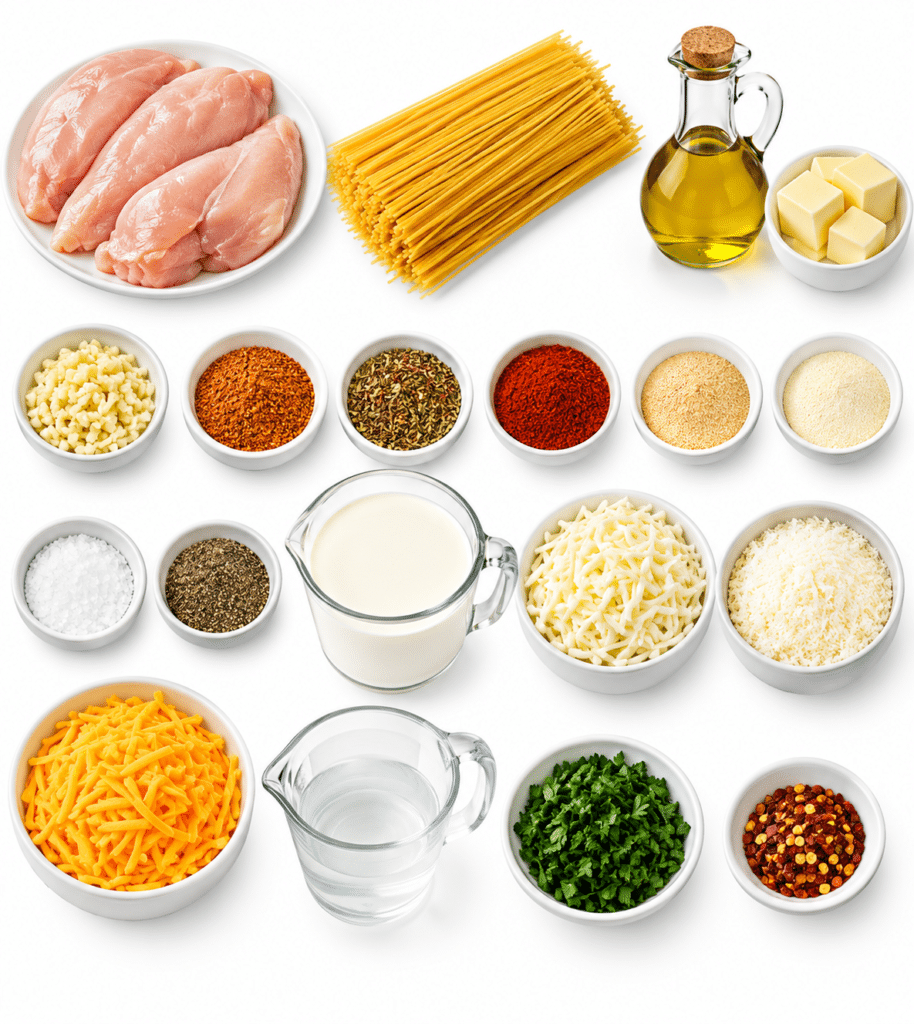
Ingredient Tips
- Pat the chicken dry before seasoning.
- Use freshly grated Parmesan for the smoothest sauce.
- Shred the mozzarella and cheddar yourself when possible.
- Keep the cream at a gentle simmer rather than a hard boil.
- Add the cheeses gradually.
- Reserve pasta water before draining the spaghetti.
- Adjust the Cajun seasoning according to your preferred spice level.
- Fresh parsley adds brightness to the rich finished dish.
What Ingredients Do You Need?
For the Cajun Chicken
- 1 lb boneless, skinless chicken breasts, sliced into thick cutlets
- 1 tbsp olive oil
- 4 tbsp unsalted butter, divided
- 5 garlic cloves, minced and divided
- 1½ tsp Cajun seasoning, divided
- 1 tsp Italian seasoning, divided
- ¾ tsp smoked paprika
- ½ tsp garlic powder
- ½ tsp onion powder
- ¾ tsp salt, divided
- ½ tsp black pepper, divided
For the Cheesy Alfredo Spaghetti
- 10 oz spaghetti
- 1¼ cups heavy cream
- 1 cup shredded mozzarella cheese
- ¾ cup freshly grated Parmesan cheese
- ¾ cup shredded sharp cheddar cheese
- ⅓ cup reserved pasta water, if needed
- ¼ tsp crushed red pepper flakes, optional
- 2 tbsp chopped fresh parsley
Preparation Step by Step
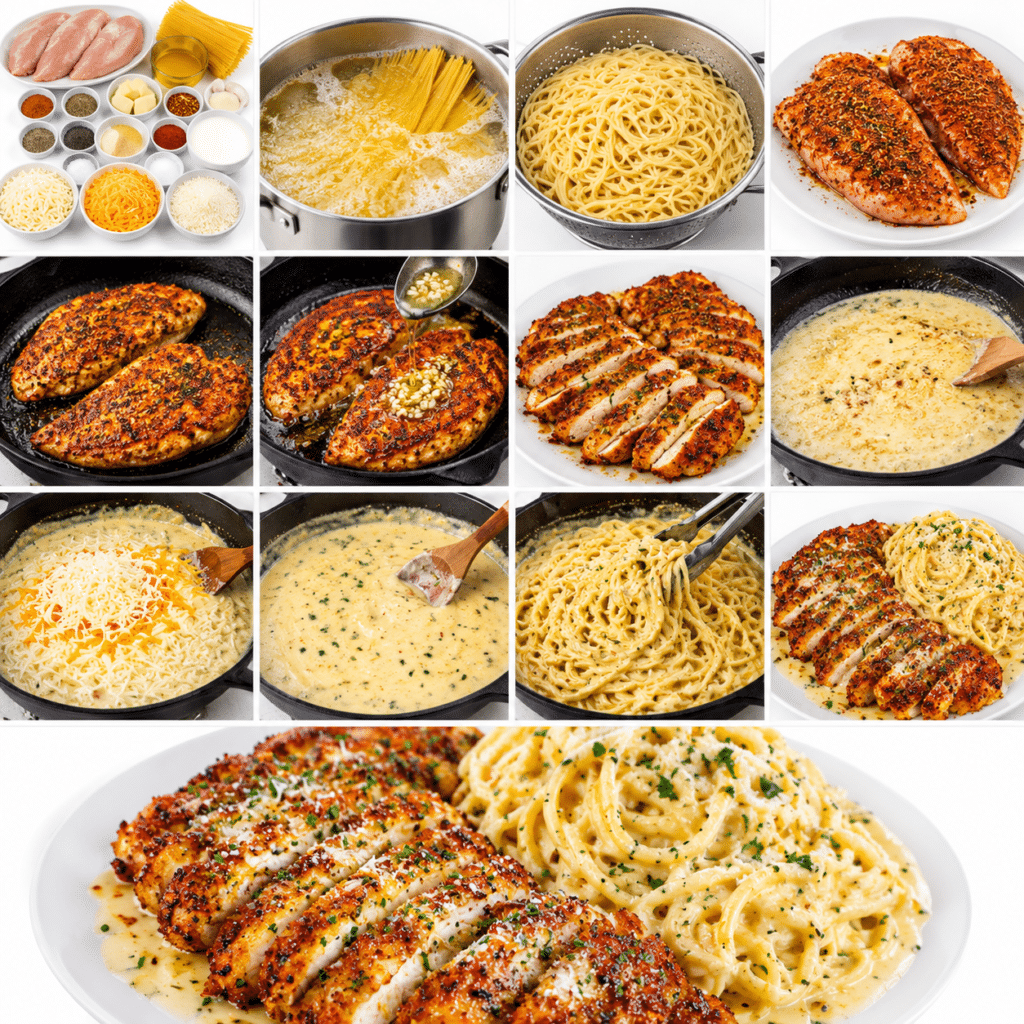
1. Prepare the Spaghetti
Begin by bringing a large pot of generously salted water to a boil.
Add the spaghetti and cook according to the package directions until al dente.
The spaghetti should be tender but still have a slight firmness when bitten.
This is important because the pasta will later spend another minute or two in the Alfredo sauce. If it is already very soft when drained, it can become overcooked once combined with the sauce.
Before draining, carefully reserve ⅓ cup of the pasta cooking water.
Drain the spaghetti and set it aside.
Avoid rinsing the pasta. The starch remaining on its surface helps the creamy cheese sauce cling to the strands later.
2. Prepare the Chicken
While the pasta is cooking, prepare the chicken.
If the chicken breasts are particularly thick, slice them horizontally into thick cutlets so they cook evenly.
Pat both sides thoroughly with paper towels.
This small step makes a noticeable difference because excess moisture can prevent the chicken from developing a deep golden crust.
Place the chicken on a plate or cutting board.
3. Season the Chicken Generously
Season both sides of the chicken with:
- 1 tsp Cajun seasoning
- ½ tsp Italian seasoning
- ¾ tsp smoked paprika
- ½ tsp garlic powder
- ½ tsp onion powder
- ½ tsp salt
- ¼ tsp black pepper
Rub the seasoning gently into the chicken so the entire surface is covered.
Don’t worry about making the seasoning layer perfectly uniform. Some variation creates flavorful browned spots as the chicken cooks.
Allow the seasoned chicken to sit for a few minutes while the skillet heats.
4. Heat the Skillet
Place a large skillet over medium-high heat.
Add the olive oil and 1 tablespoon of butter.
Let the butter melt completely and combine with the oil.
The oil helps raise the butter’s cooking tolerance while the butter contributes its characteristic richness.
Wait until the skillet is hot before adding the chicken.
A properly heated skillet is essential for getting that beautifully browned exterior.
5. Sear the Chicken
Place the chicken in the skillet in a single layer.
Don’t overcrowd the pan.
Let the chicken cook undisturbed for approximately 4–5 minutes.
Resist the urge to constantly move or flip it.
Allowing the chicken to remain in contact with the hot skillet gives the seasoned surface time to develop a deep golden crust.
Flip the chicken and cook for another 3–5 minutes, depending on thickness.
The chicken should be deeply golden on the outside and fully cooked inside, reaching an internal temperature of 165°F (74°C).
6. Finish the Chicken with Garlic Butter
During the final 30 seconds of cooking, add 2 minced garlic cloves and 1 tablespoon butter.
As the butter melts, gently spoon it over the chicken.
The garlic should become fragrant without burning.
This brief finishing step creates the garlic butter flavor that makes the chicken especially delicious.
Once cooked, transfer the chicken to a plate.
Let it rest for several minutes before slicing.
Resting helps the juices redistribute throughout the meat, keeping the chicken tender.
7. Don’t Clean the Skillet
This is an important flavor-building step.
Do not wash or completely wipe out the skillet.
The browned bits left behind from the chicken are full of flavor.
They will become part of the Alfredo sauce when the cream is added.
This is one of the easiest ways to make a simple cream sauce taste much deeper and more developed.
8. Start the Alfredo Sauce
Reduce the skillet heat to medium-low.
Add the remaining 2 tablespoons of butter.
Once melted, add the remaining minced garlic.
Cook for approximately 30 seconds.
Stir constantly and watch carefully.
You want the garlic to become fragrant and lightly softened, not brown or burn.
Burnt garlic can introduce an unpleasant bitterness into an otherwise delicate cream sauce.
9. Add the Heavy Cream
Pour the 1¼ cups heavy cream into the skillet.
As you pour, use a wooden spoon or spatula to gently scrape the bottom of the pan.
Lift the browned chicken bits into the cream.
These little pieces add concentrated savory flavor to the sauce.
Bring the cream to a gentle simmer.
Allow it to cook for approximately 3–4 minutes, stirring occasionally.
The cream should reduce slightly and become a little thicker.
Avoid letting it boil aggressively.
10. Add the Three Cheeses
Lower the heat.
Now gradually add the mozzarella, Parmesan, and cheddar.
Don’t add all the cheese at once.
Start with a small handful of mozzarella and stir until mostly melted.
Follow with some Parmesan, then cheddar.
Continue alternating and stirring until all the cheese has melted into the cream.
The sauce should become thick, smooth, glossy, and velvety.
Keeping the heat low is particularly important here.
High heat can cause the dairy and cheese to separate, while gentle heat gives the cheeses time to emulsify into the cream.
11. Season the Alfredo Sauce
Add the remaining:
- ½ tsp Cajun seasoning
- ½ tsp Italian seasoning
- ¼ tsp salt
- ¼ tsp black pepper
If you enjoy extra heat, add the optional ¼ tsp crushed red pepper flakes.
Stir thoroughly.
Taste the sauce before adding additional salt.
The Parmesan and cheddar already contain salt, so you may find that the listed amount is enough.
12. Add the Spaghetti
Add the cooked spaghetti directly to the skillet.
Using tongs, gently lift and turn the pasta through the cheese sauce.
Continue tossing until every strand is heavily coated.
Don’t simply stir the pasta around the surface.
Lift portions from the bottom and turn them over repeatedly so the Alfredo sauce reaches every strand.
The sauce should cling to the spaghetti rather than pooling at the bottom of the pan.
13. Adjust the Sauce with Pasta Water
If the Alfredo sauce is thicker than you prefer, add reserved pasta water one tablespoon at a time.
Toss after each addition.
The starchy pasta water helps loosen the cheese sauce without making it watery.
You may not need all ⅓ cup.
Stop as soon as the spaghetti reaches a creamy, silky consistency.
The ideal sauce should coat the pasta generously while remaining fluid enough to move easily when the spaghetti is lifted with tongs.
14. Finish the Chicken
While the pasta is being finished, slice the rested chicken into thick strips.
Keep any garlic butter and juices left on the plate.
Those flavorful juices can be spooned over the finished chicken or lightly over the pasta.
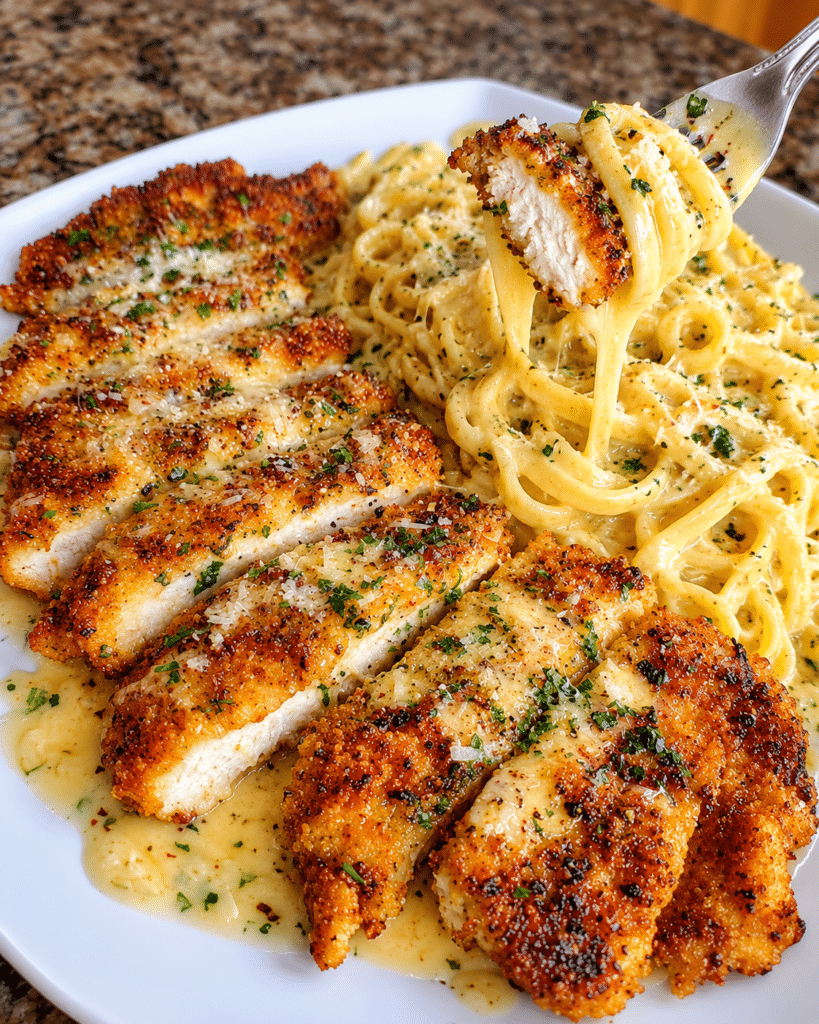
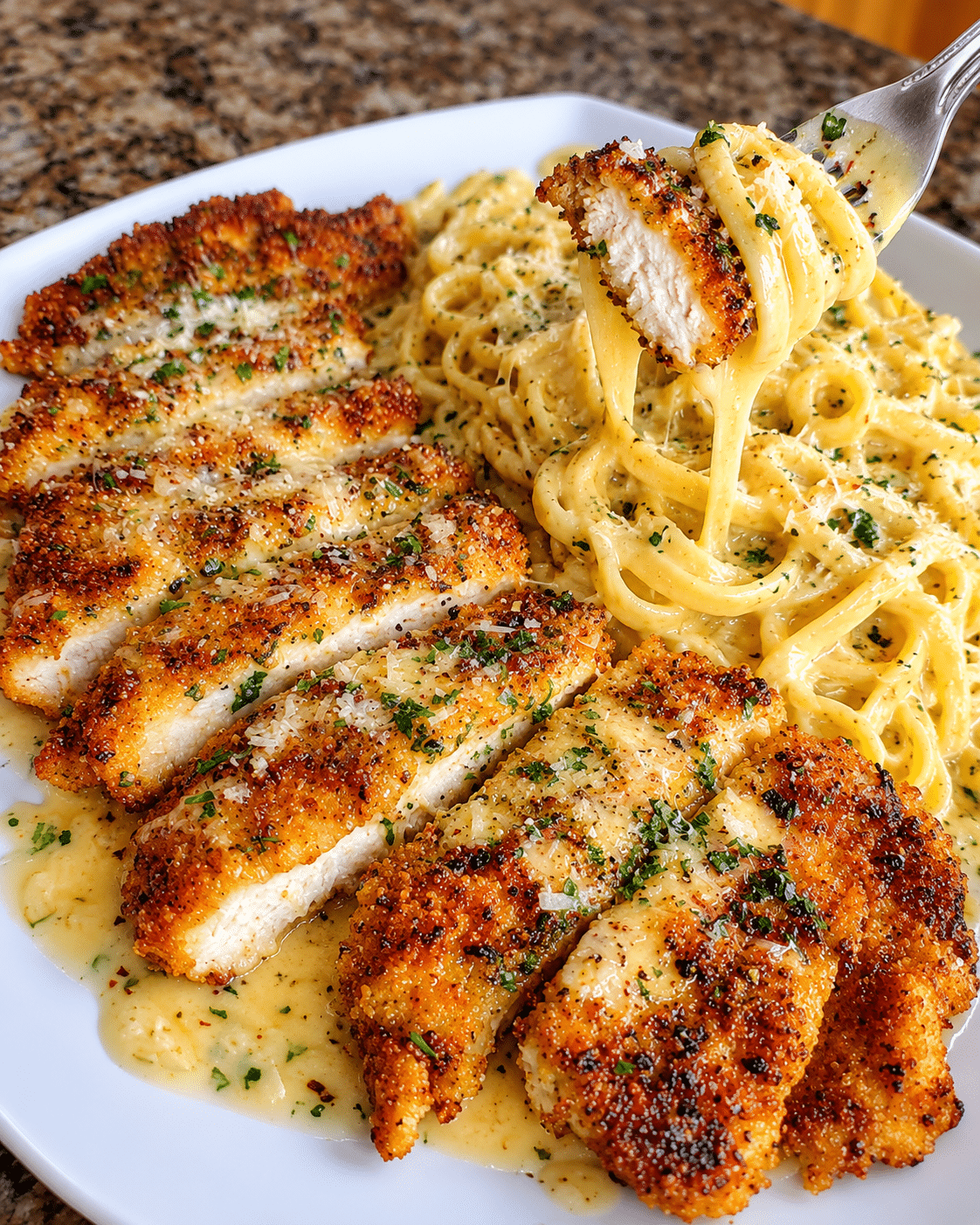
The contrast between the golden Cajun coating and creamy white cheese sauce makes the finished dish especially appetizing.
15. Plate the Dish
Arrange a generous portion of cheesy Alfredo spaghetti on each plate.
Place several slices of Cajun chicken beside the spaghetti or arrange them partially over the top.
For a restaurant-style presentation, keep the chicken slightly separate so its golden, seasoned exterior remains visible.
Spoon a little extra Alfredo sauce over the pasta.
Finish with chopped fresh parsley and, if desired, a small amount of extra Parmesan.
Serve immediately.
Tips for the Best Results
Don’t Move the Chicken Too Soon
The chicken needs uninterrupted contact with the skillet to develop a golden crust.
Give it those first 4–5 minutes before flipping.
Don’t Burn the Garlic
Garlic only needs a short time in hot butter.
Once it becomes fragrant, move quickly to the next step.
Keep the Cheese Sauce Gentle
Never aggressively boil a cream-and-cheese sauce.
Low to medium-low heat gives you a much smoother result.
Add Cheese Gradually
Adding the cheeses in small portions makes it easier to maintain a smooth Alfredo texture.
Reserve Enough Pasta Water
Even if you think you won’t need it, reserve the recommended amount before draining.
Once the pasta is added, the sauce may thicken more than expected.
Serve Immediately
Cream sauces naturally become thicker as they cool.
This dish is at its best when served immediately, while the Alfredo is glossy and the cheese is still beautifully melted.
How to Make It Even Better
The most important element is balance.
The chicken should be boldly seasoned, while the Alfredo sauce should be rich but smooth.
If your Cajun seasoning is particularly salty, reduce the added salt slightly.
For additional depth, allow the cream to reduce for a few minutes before adding the cheese.
For a brighter finish, fresh parsley is more than decoration. Its fresh herbal flavor helps balance the richness of the butter, cream, and cheese.
A little lemon zest can also work surprisingly well if you enjoy a subtle citrus note with Cajun chicken.
Air Fryer Side Dish
An air fryer is useful for preparing a vegetable side without taking up another burner.
Try air-fried broccoli, asparagus, green beans, or zucchini.
The crisp edges and lighter texture make a great contrast to the creamy spaghetti.
If you’re researching the best air fryer 2026, consider practical capacity, easy cleaning, and temperature control if you mainly want one for everyday side dishes.
Robot Pâtissier for Homemade Bread
A robot pâtissier isn’t needed for the chicken or pasta, but it can be helpful if you want to prepare homemade garlic bread, dinner rolls, or soft breadsticks to accompany the meal.
Fresh bread is particularly useful with this recipe because there is plenty of creamy Alfredo sauce left on the plate.
Essential Kitchen Utensils
You don’t need an elaborate kitchen setup.
A large skillet, pasta pot, colander, tongs, wooden spoon, whisk, and sharp knife cover nearly everything required.
These are among the essential kitchen utensils worth keeping within easy reach because they are useful for countless everyday recipes.
Variations
Extra-Spicy Cajun Chicken
Increase the Cajun seasoning slightly and add more crushed red pepper flakes.
For serious heat lovers, a pinch of cayenne can also be added to the chicken seasoning.
Cajun Shrimp and Chicken
Add a few seasoned shrimp to the skillet after cooking the chicken.
Cook them quickly until pink and opaque, then serve alongside the chicken and pasta.
Cajun Steak Alfredo
Replace the chicken with thinly sliced sirloin steak.
Sear it quickly over high heat and finish with the same garlic butter.
Spinach Alfredo
Add a couple of handfuls of fresh spinach to the Alfredo sauce just before adding the pasta.
Allow the spinach to wilt completely.
Mushroom Alfredo
Sauté sliced mushrooms in the skillet before preparing the cream sauce.
Their earthy flavor works beautifully with Cajun seasoning and Parmesan.
Lighter Version
For a lighter or more healthy / minceur approach, reduce the portion of Alfredo sauce and serve the chicken and pasta with a generous side of steamed or air-fried vegetables.
The dish will remain satisfying while the overall plate becomes more balanced.
What to Serve with Cajun Chicken Alfredo
Because the pasta is creamy and rich, fresh vegetables are ideal.
Try:
- Green salad with lemon vinaigrette
- Air-fried broccoli
- Roasted asparagus
- Garlic green beans
- Sautéed spinach
- Roasted zucchini
- Fresh tomato salad
- Steamed vegetables
Garlic bread is another classic choice.
If you’re serving this for a family dinner, a simple green salad and warm bread are more than enough to complete the meal.
For dessert or after-dinner relaxation, serve a small coffee prepared with a machine à café.
An espresso or smooth black coffee provides a pleasant contrast to the rich, cheesy Alfredo sauce.
Conservation and Reheating
This recipe is best enjoyed immediately, but leftovers can be stored safely in the refrigerator.
Allow the pasta and chicken to cool slightly, then place them in airtight containers.
Refrigerate and consume within approximately 3–4 days.
The Alfredo sauce will thicken considerably when cold.
When reheating, add a small splash of milk, cream, or chicken broth.
Warm the pasta gently over low to medium-low heat, stirring frequently.
Avoid extremely high heat because it can cause the cheese sauce to separate.
For microwave reheating, use short intervals and stir between each one.
The chicken can be reheated separately and placed over the pasta afterward.
If the sauce seems dry after reheating, a spoonful of warm milk or reserved-style pasta water can help restore some creaminess.
Frequently Asked Questions
Can I use chicken thighs instead of chicken breasts?
Yes. Boneless, skinless chicken thighs are an excellent alternative and tend to remain very juicy. Adjust the cooking time according to the size of the pieces and make sure the chicken reaches 165°F (74°C).
Can I use another pasta shape?
Absolutely. Fettuccine, linguine, penne, rigatoni, or even bowtie pasta can work. Spaghetti is particularly nice because the creamy sauce coats every strand.
Why did my Alfredo sauce become grainy?
Usually, excessive heat is the culprit. Cheese sauces should be cooked gently. Add the cheese gradually over low heat and stir continuously until smooth.
Do I need all the reserved pasta water?
Not necessarily. The ⅓ cup is there as a backup. Add it one tablespoon at a time only if the sauce is too thick.
Can I make this recipe less spicy?
Yes. Use a mild Cajun seasoning and omit the crushed red pepper flakes. You can also reduce the Cajun seasoning used in the sauce while keeping enough on the chicken for flavor.
Conclusion
Garlic Butter Cajun Chicken with Cheesy Alfredo Spaghetti brings together everything you want from a comforting dinner: golden seasoned chicken, fragrant garlic butter, tender spaghetti, and an incredibly creamy three-cheese Alfredo sauce.
The chicken delivers smoky Cajun flavor, while mozzarella, Parmesan, and sharp cheddar create a sauce that is rich, smooth, and wonderfully cheesy. The reserved pasta water helps bring everything together, ensuring the Alfredo clings beautifully to every strand.
For the best result, take your time browning the chicken, don’t burn the garlic, keep the cream sauce at a gentle temperature, and add the cheese gradually.
Then serve it immediately with plenty of fresh parsley and a little extra Parmesan.
Whether you’re cooking for family, preparing a cozy weekend dinner, or simply craving a bowl of seriously satisfying comfort food, this recipe is one to save.
Ingredients
Method
- Cook the spaghetti in a large pot of salted boiling water until al dente. Reserve ⅓ cup of pasta water, then drain the spaghetti.
- Pat the chicken dry. Season both sides with 1 teaspoon Cajun seasoning, ½ teaspoon Italian seasoning, smoked paprika, garlic powder, onion powder, ½ teaspoon salt, and ¼ teaspoon black pepper.
- Heat the olive oil and 1 tablespoon butter in a large skillet over medium-high heat.
- Add the chicken in a single layer and sear for 4 to 5 minutes without moving. Flip and cook for another 3 to 5 minutes, until deeply golden and the internal temperature reaches 165°F.
- Add 2 minced garlic cloves and 1 tablespoon butter during the final 30 seconds. Spoon the garlic butter over the chicken, then transfer it to a plate and let it rest before slicing.
- Reduce the heat to medium-low. Melt the remaining 2 tablespoons butter in the same skillet and add the remaining garlic. Cook for 30 seconds without browning.
- Pour in the heavy cream and scrape up the browned bits from the skillet. Simmer gently for 3 to 4 minutes until slightly reduced.
- Lower the heat. Add the mozzarella, Parmesan, and cheddar gradually, stirring until melted into a thick, smooth sauce.
- Season the sauce with the remaining Cajun seasoning, Italian seasoning, salt, black pepper, and crushed red pepper flakes.
- Add the spaghetti and toss until every strand is heavily coated. Add reserved pasta water one tablespoon at a time only if needed.
- Arrange the sliced Cajun chicken separately beside the spaghetti. Spoon extra Alfredo sauce over the pasta and lightly around the plate.
- Finish with chopped parsley, extra Parmesan, and any garlic butter left from the chicken